
Reviewed · MALLORCA COOKING CLASSES AND PAELLA EXPERIENCES
4-Hour Market Visit and Traditional Cooking Workshop in Palma
Palma’s best food lesson starts before you enter the kitchen. You’ll meet Deborah at Mercado del Olivar, walk among fruit, fish, cheese, and local specialty stalls, then use what you find to cook a seasonal four-course meal. This is not a demonstration where you sit and watch. You will chop, stir, shape, and taste.
I like the small maximum of eight people, which gives Deborah room to put everyone to work. I also like the close link between the market and the meal: you see the ingredients in their everyday setting, then learn how they fit into Mallorcan cooking. The main thing to consider is the price, $173.75 per person, which makes this a special outing rather than a casual lunch.
Key points to know
- One hour at Mercado del Olivar: Shop for ingredients while learning about Palma’s food culture and local producers.
- A complete four-course meal: The sample menu includes cheeses and cured meats, Mallorcan flatbread, sobrasada and artichoke rice, and almond cake.
- Hands-on instruction from Deborah: You take part in the cooking instead of simply watching a chef work.
- A maximum of eight people: The compact group suits anyone who wants personal help and a relaxed pace.
- Two glasses of wine included: Alcohol is included for adults aged 18 and over, with extra wine available at an additional cost.
- Recipes and practical skills to take home: You receive the recipes and learn techniques suited to a home kitchen.
Start with Palma’s Olivar Market
The experience begins at El darrer vestit on Tomàs Vila in central Palma. From there, you walk to Mercado del Olivar, the city’s largest traditional market. Its location near public transportation makes the meeting point fairly easy to reach, but you should still allow time to find the exact starting spot.
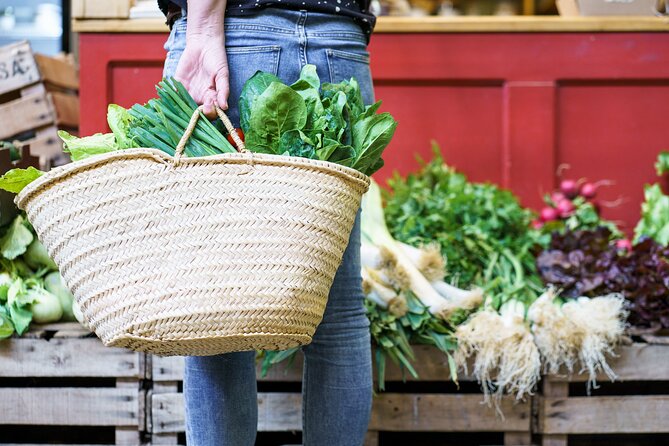
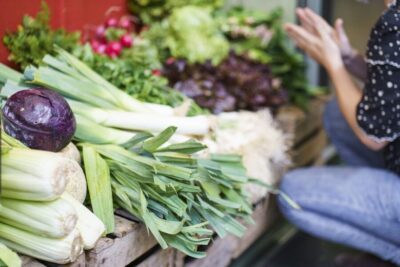
The market visit lasts about one hour. That is enough time to get a feel for the place without turning the morning into a long shopping expedition. Deborah leads you through stalls selling fruit, fish, and other local foods, introducing the products needed for the cooking session.
The useful part is the connection between what you see and what you later eat. You are not simply looking at attractive produce. You are learning how Mallorca’s food calendar shapes the meal, which ingredients are available in a given season, and how small farmers and producers supply the island.
You might find the market especially interesting if you enjoy seeing how local people shop for everyday food. It gives you a better sense of Mallorca beyond restaurant menus and beachside dining. The market is also a good setting for questions. Ask about ingredients, family recipes, food customs, and the difference between products that look familiar but taste very different.
The market stop does require some walking and standing. It is also a working food market, not a staged attraction, so the feel may be busy at times. That is part of its value, but you should not expect a quiet private tour through empty stalls.
More to do in Palma:
- Palma: Cathedral of Mallorca Skip-the-Line Entry Ticket
★ 4.6 · 14,386 reviews - Palma de Mallorca: 5-Hour Catamaran Cruise with Lunch & Swim
★ 4.5 · 9,957 reviews - Palma de Mallorca: City Sightseeing Hop-On Hop-Off Bus Tour
★ 4.1 · 4,450 reviews
From shopping basket to Mallorcan kitchen
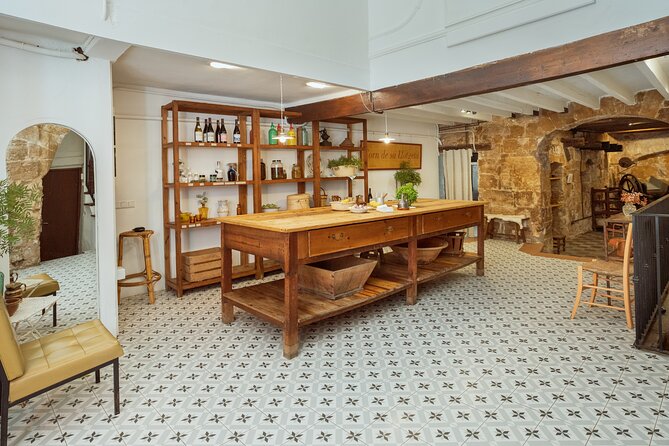
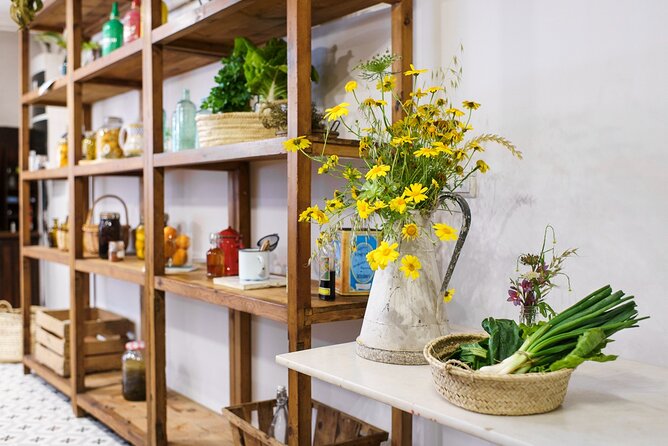
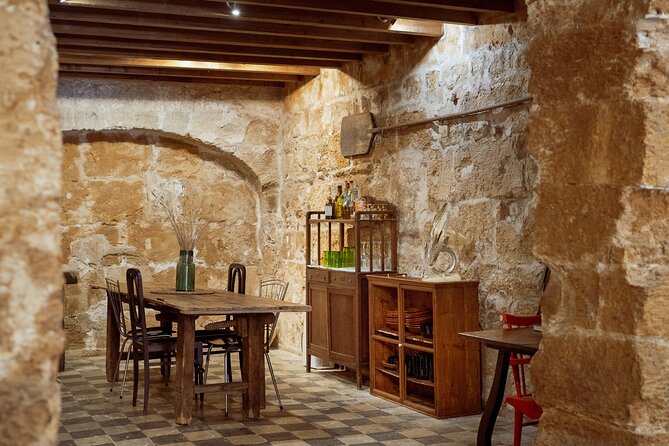
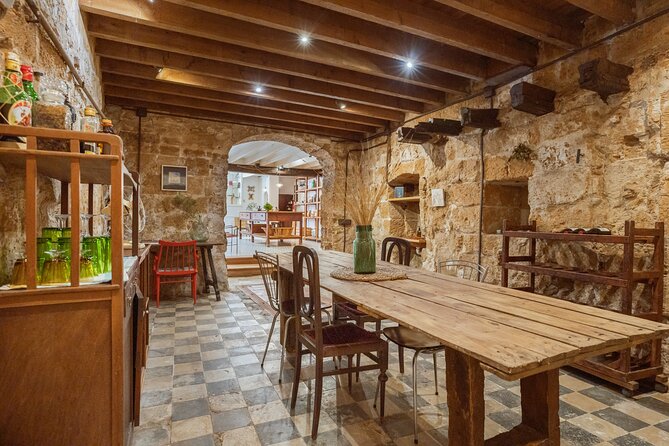
After the market, you head to Deborah’s atelier for the cooking workshop. The kitchen is described as a beautiful, authentic Mallorcan house with a rustic feel. That atmosphere matters. You are cooking in a setting tied to local domestic life, rather than in a polished school designed to look the same in every country.
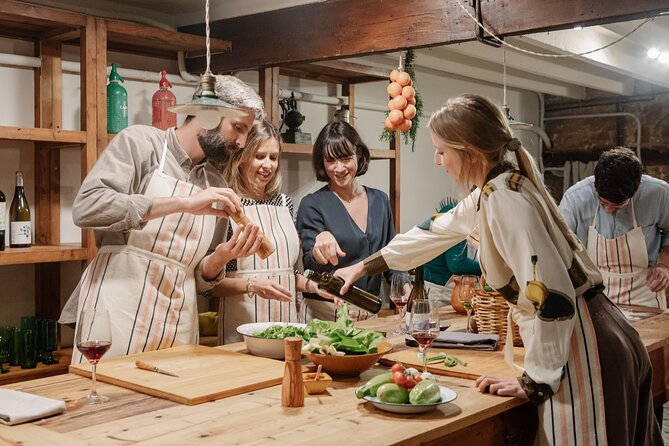
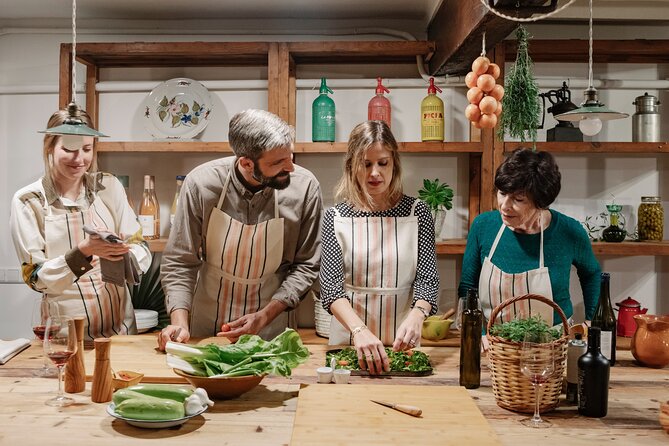
Deborah’s role is central to the experience. She explains the recipes, organizes the work, and helps you handle unfamiliar ingredients and techniques. The class is designed around participation, so you should be ready to take instructions and get involved.
The small group size helps here. With no more than eight people, you are less likely to spend the class waiting for a turn. Deborah can also adjust her guidance to different skill levels. You do not need to arrive as an experienced cook, and the practical nature of the class makes it suitable for families with older children who enjoy food and kitchen work.
The setting has received particular praise for feeling welcoming and authentic. One useful detail is that the class is not treated as a race through a fixed script. Deborah has been described as patient and attentive, including when a participant needed to take breaks. That suggests a considerate pace, though you should still tell the provider about any needs before the class begins.
What you cook: four courses with a clear Mallorcan identity
The sample menu gives you a good idea of the kind of food involved. It is not a generic Spanish cooking class with one familiar dish. The menu uses ingredients and recipes closely tied to Mallorca.
Local meats, cheese, grapes, and almonds
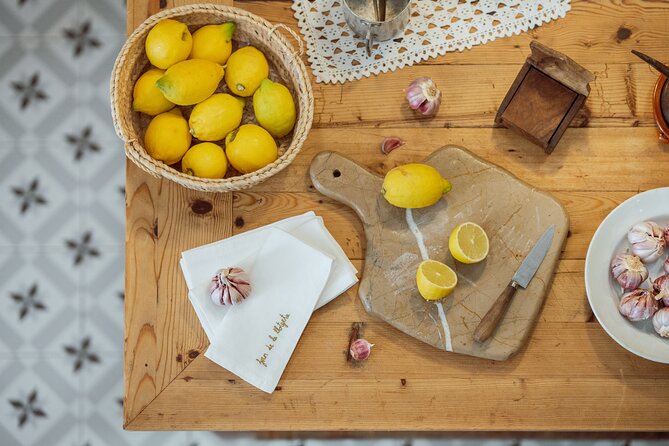
The first starter combines local cold meats and artisan cheeses with grapes and almonds. This is a simple course, but it teaches an important part of island eating: good local products need little decoration.
The combination also introduces flavors that return later in the meal. Almonds are a major part of Mallorcan cooking, and you will encounter them again in dessert. The cured meats and cheese offer a chance to compare textures and seasoning while learning how these products are served locally.
More cooking classes in Mallorca:
- Palma: Mediterranean Cooking Class with Drinks
★ 4.8 · 240 reviews - Private sailing with Paella and Tapas in Palma
★ 5.0 · 147 reviews - Spanish Cooking Class Palma meals+drinks 7 dishes Full meals
★ 5.0 · 122 reviews - Spanish Cooking Class Palma meals+drinks 7 dishes Full meals
★ 5.0 · 58 reviews
Mallorcan flatbread with greens and raisins
The second starter is a Mallorcan flatbread topped or filled with greens and raisins. The contrast between savory vegetables and sweet fruit makes this more interesting than a standard bread course.
This is one of the hands-on parts of the class where you can expect to work with dough and toppings. The dish also reflects the island’s traditional use of ingredients that keep well and can be combined in practical ways. Seasonal greens may vary, so the exact version can depend on the food calendar.
Artichoke and sobrasada rice in a clay pot
The main course is artichoke and sobrasada meloso rice cooked in a greixonera, a traditional clay pot. This is likely to be the most technique-focused dish of the meal.
Meloso rice is softer and creamier than a dry rice dish, but it is not simply a risotto lesson with Mallorcan labels attached. Sobrasada gives the dish a distinct island character, while artichokes add a seasonal vegetable element. Cooking in clay is also part of the experience, since the vessel affects how the dish heats and holds moisture.
This course makes the class worthwhile for cooks who want to learn more than a list of recipes. Rice requires attention to timing, liquid, heat, and texture. You will have the chance to see how Deborah manages those details and then try the method yourself.
Gató with almond ice cream
Dessert is gató, a Mallorcan almond cake, served with almond ice cream. It brings the meal back to one of the island’s signature ingredients.
The cake is a fitting finish because it shows how almonds work in both everyday and celebratory cooking. You will also leave with a recipe you can attempt at home, though you may need to adapt the process to your own oven and available ingredients.
Why the seasonal approach matters
The meal follows Mallorca’s food calendar rather than relying on one permanent menu. That means the dishes and ingredients can change with the season. The listed menu is a sample, so you should not book expecting every item to appear on every date.
This approach is a strength for anyone who wants a genuine connection to the island’s food. You learn that Mallorcan cooking is not just about a handful of famous dishes. It is also about using what farmers produce, choosing ingredients at the right time, and respecting the character of local products.
The class also places emphasis on organic wine and sustainable sourcing. Deborah works with small producers and farmers, linking the cooking lesson to the people who grow and make the food. You will not receive a full farm visit, but you will get a clearer picture of how local food reaches Palma’s market and kitchen tables.
The meal is part of the lesson
Lunch is included, and it consists of the dishes you prepare. This makes the final meal more satisfying than simply receiving a plate at the end. You have handled the ingredients and watched each course come together, so you understand the work behind it.
Two glasses of wine per person are included for anyone aged 18 or older. Extra wine costs more. The wine pairing is a modest inclusion, not an open bar, so plan on the two glasses specified rather than unlimited drinks.
The meal also gives the class a social finish. You can sit down, eat what you made, and discuss the food while the techniques are still fresh. For couples, families, or friends, this shared table may be the most memorable part of the four hours.
If you do not drink alcohol, the tour information does not specify a substitute. Ask about this before booking if it matters to you.
What the $173.75 price gets you
At $173.75 per person, this is expensive compared with a standard market tour or ordinary lunch in Palma. The value comes from combining several services in one four-hour experience: a guided market visit, all ingredients, cooking instruction, recipes, the meal, and two glasses of wine.
You are also paying for a small group and a host who provides personal guidance. A class capped at eight can be worth more to a beginner than a cheaper, crowded session where you mainly watch. The recipe collection adds value if you plan to cook Mallorcan food after returning home.
I would not choose this for a quick introduction to Spanish cuisine. Palma has cheaper ways to eat well. I would choose it if you want an activity that takes up half a day and gives you something practical to bring home.
The price makes most sense for people who enjoy cooking, local markets, and long meals. It makes less sense if you dislike kitchen work, want a fast sightseeing stop, or prefer to choose your own restaurant menu.
Who will enjoy this most
This class is a strong match for:
- Home cooks who want regional recipes rather than broad Spanish basics
- Couples looking for a shared food activity in Palma
- Families whose children enjoy cooking and trying new foods
- Visitors interested in local producers and traditional ingredients
- Anyone who values a small group and direct help from the instructor
It may be less suitable for someone who wants a formal chef demonstration with little participation. The workshop expects you to take part. If you have dietary requirements, tell Deborah in advance. The provider will do its best to adapt the class, but you should not wait until the market visit to raise the issue.
The four-hour length is another factor. It is long enough to feel like a proper half-day activity, but that means it needs a place in your Palma schedule. Do not book it immediately before another fixed appointment unless you have plenty of spare time.
Practical details before you book
The activity begins and ends at the meeting point in central Palma. Private transportation is not included. Since the starting point is near public transportation, you can make your own way there, but the exact address should be checked carefully before setting out.
Confirmation is provided at booking. The class is offered in English and has a maximum of eight participants. Alcohol is limited to people aged 18 and older.
Free cancellation is available if you cancel at least 24 hours before the local start time. Changes or cancellations made inside that window are not refunded. The experience also requires a minimum number of participants, and if that minimum is not reached, you will be offered another date or experience, or a full refund.
The activity is often reserved well ahead of time, with an average booking lead time of about 47 days. That is a useful warning for anyone planning a summer visit or a short stay in Palma. If this is important to your itinerary, reserve before your arrival rather than hoping for a last-minute place.
Should you book Deborah’s cooking workshop?
Book it if you want to understand Mallorca through its food, not just eat a plate of it. The market visit gives context, the workshop gives you useful kitchen practice, and the shared lunch ties the whole morning together.
The strongest reasons to go are Deborah’s personal teaching style, the compact group, and the menu’s clear Mallorcan identity. The main drawbacks are the high price, the need to spend four hours on a structured activity, and the possibility that the seasonal menu will differ from the sample.
For food-focused visitors, families who like cooking, and anyone seeking a personal Palma experience, I think the cost is justified. If you simply want a market stroll or an inexpensive meal, choose something else. This is best treated as a food lesson, a cultural visit, and lunch in one.
FAQ
Where does the experience begin?
It begins at El darrer vestit on Tomàs Vila in central Palma, at the address provided for the meeting point.
Where does the experience end?
The activity ends back at the meeting point.
How long does the experience last?
The experience lasts approximately four hours.
How long is the market visit?
The market portion lasts one hour.
Which market do you visit?
You visit Mercado del Olivar, the largest traditional market in Palma.
How many people can join the class?
The activity has a maximum of eight participants.
Is the experience offered in English?
Yes, the experience is offered in English.
What food might I prepare?
The sample menu includes local cold meats and artisan cheeses with grapes and almonds, Mallorcan flatbread with greens and raisins, artichoke and sobrasada meloso rice cooked in a greixonera, and gató with almond ice cream.
Are ingredients and recipes included?
Yes. Ingredients, materials, and recipes are included.
Is wine included?
Yes. Two glasses of wine per person are included for people aged 18 and older. Additional wine is not included.
Can dietary requirements be accommodated?
You should advise the provider of your dietary requirements in advance. The provider will do its best to adapt the course to your needs.
More Workshops in Mallorca
- Mallorca: Stand Up Paddle Lesson (1H PRIVATE CLASS)
★ 4.9 · 44 reviews - 2-Hour Small Group Ceramic Workshop in a Natural Environment
★ 5.0 · 9 reviews - Mallorca: Private Windsurf Lesson
★ 5.0 · 8 reviews
More Markets in Mallorca
- Cap de Formentor: Market, Beach, and Alcudia Tour
★ 4.3 · 620 reviews - Formentor with boat trip + local market
★ 4.0 · 73 reviews - Mallorca: Market Visit and Traditional Cooking Workshop
★ 4.9 · 29 reviews - Palma: 2.5-Hour Chinatown Market Tour
★ 4.7 · 18 reviews
Newest Mallorca write-ups
- SUP tour from Palma to Mondrago Beach and Samarador★ 5.0 · 11 reviews
- Palma Jump ticket★ 4.0 · 17 reviews
- Mallorca Blue Cave Boat Tour with Snorkel★ 4.5 · 26 reviews
- Safari Alcudia Jack Sparrow cave tour 90MIN★ 4.0 · 20 reviews
- Afternoon Snorkel & Paddle Surf Experience in a Secret Spot★ 5.0 · 8 reviews
- Extreme e-scooter off-road excursions★ 5.0 · 3 reviews
- FUN Quad Mallorca★ 4.5 · 33 reviews
- Guided Kayak Tour from Sant Elm to Sa Dragonera★ 4.5 · 11 reviews
Mallorca Cooking Classes and Paella Experiences, compared.
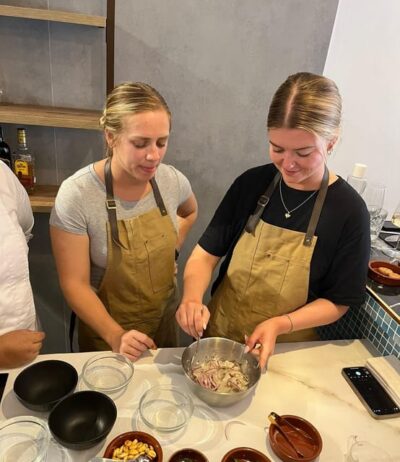
Spanish Cooking Class Palma meals+drinks 7 dishes Full meals
Read our review →Spanish Cooking Class Palma meals+drinks 7 dishes Full meals
Read our review →
Browse the lists this tour appears in