
Reviewed · COOKING CLASSES
Traditional recipes cooking experience
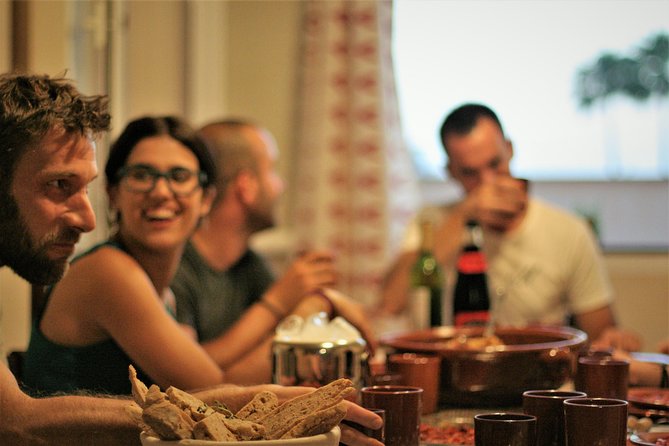
Mallorca’s best food lesson may happen far from a polished restaurant. In Sant Jordi, just outside Palma, Paula leads you through a starter, main course, and dessert based on the island’s home cooking. You work with your hands, then sit down to eat what you made.
I like the small maximum of eight people, which gives this class a personal feel. I also like the setting: Sant Jordi was once known as Palma’s pantry, with fields, vegetables, potatoes, and old windmills around the village. This is a pleasant way to see a quieter side of Mallorca.
The main drawback is practical: transportation is not included, and the kitchen is outside central Palma. The experience is also non-refundable, so check your plans and dietary needs before booking.
Key points to know before booking
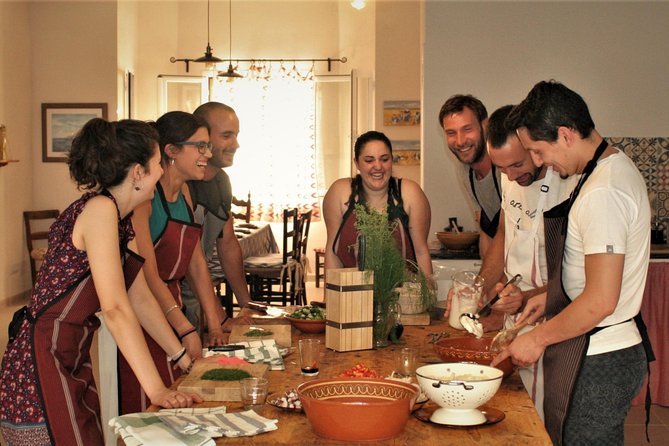
- Traditional Mallorcan menu: Prepare a starter, main course, and dessert based on family-style island cooking.
- Paula leads the class: Her warm, relaxed approach is a major part of the experience.
- Small group size: The class accepts no more than eight people.
- Sant Jordi setting: Cook near fields and characteristic Mallorcan windmills in an area once called Palma’s pantry.
- Food and drinks included: Lunch, tastings, snacks, coffee, tea, and alcoholic beverages are covered.
- Five-hour schedule: The class begins at 11:00 am and finishes back at the kitchen.
Why this class feels different from a restaurant meal
A restaurant gives you a finished dish. This class gives you the slower story behind it.
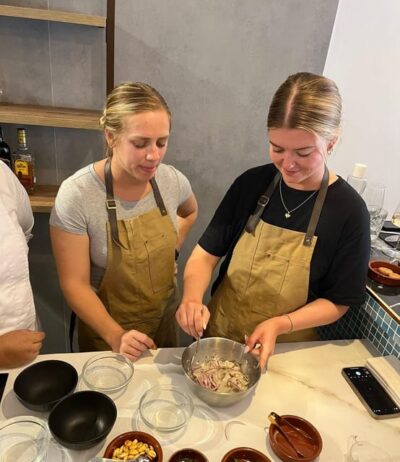
You will prepare three courses from start to finish: a starter, a main course, and dessert. The dishes are chosen as an easy introduction to cooking, so you do not need advanced kitchen skills. The point is not to race through a professional kitchen. It is to understand how local food comes together when people have time to cook, talk, and eat.
That slower pace matters in Mallorca. Food here is closely tied to the island’s farms, family kitchens, and seasonal produce. Paula also explains where traditional foods come from on the island, giving the cooking a useful sense of place rather than treating the recipes as a generic Spanish menu.
I especially like that the experience is designed around home cooking, not restaurant presentation. You are not simply watching a chef perform. You are involved in the preparation, then get to taste the result over lunch.
A few more Mallorca days on the water and off it
- Spanish Cooking Experience in Mallorca
★ 5.0 · 484 reviews - Palma de Mallorca: Spanish Cooking Experience
★ 5.0 · 288 reviews - Palma: Mediterranean Cooking Class with Drinks
★ 4.8 · 240 reviews
Cooking in Sant Jordi, Palma’s former pantry
The kitchen is at Carrer Pintor Gabriel Comas i Roca, 20, in Sant Jordi, on the outskirts of Palma. The village sits in a calmer area surrounded by fields and the windmills that are part of Mallorca’s rural character.
Sant Jordi has an interesting connection to food. The area was once important to Palma because of the abundance and quality of its vegetables and potatoes. It was considered the city’s pantry. That detail gives the location more meaning than a random suburban kitchen would have.
You should think of the setting as part of the lesson. The class is not in the middle of Palma’s shopping streets or beside the major sights. Instead, you reach a quieter neighborhood where the island’s agricultural past is easier to picture.
The tradeoff is simple: you need to arrange your own way there. Transportation to and from attractions is not provided, and the activity begins at 11:00 am. Plan your route carefully so you arrive on time. The class ends where it begins, at the Sant Jordi kitchen.
What happens during the five-hour class
The experience lasts about five hours, which gives enough time to prepare and eat three courses without turning lunch into a rushed exercise.
You can expect the day to move through three broad stages:
- Preparing a starter
- Cooking the main course
- Making dessert and sitting down for the meal
The exact dishes are not specified in advance, so you should not book this expecting a particular recipe. What is clear is that the menu uses traditional recipes from the Balearic Islands and is meant to be approachable for people who want to learn without feeling tested.
The cooking itself is only part of the activity. You will also get explanations about Mallorcan food and local customs. Paula’s style, as described through the experience, is warm and personal. She shares family recipes and talks about cultural details that help connect the food with everyday island life.
This is useful for beginners. You are not required to arrive with a list of cooking techniques or a strong knowledge of Spanish cuisine. The food is presented as something you can follow with your own hands, at an unhurried pace.
Paula’s personal touch
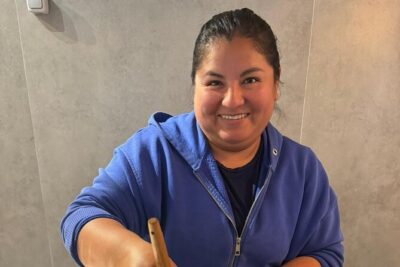
Paula is the guide and host, and her role is central to the experience. The most consistent praise focuses on her friendly manner, her ability to make people feel at home, and her clear instructions.
That combination is important in a small cooking class. A technically skilled instructor can still make a group feel awkward if the lesson is stiff or rushed. Paula’s approach appears to be more relaxed and family-oriented. She welcomes people into the kitchen, explains the recipes, and keeps the mood comfortable.
You will also hear about the origins of foods around Mallorca. That may include where certain dishes come from and how local traditions shape the meal. For me, this kind of information adds more value than a long list of cooking terms. You leave with a better idea of how Mallorcan families eat, not just how to copy a recipe.
The tone is especially suited to people who enjoy conversation. If you want a silent, highly technical demonstration, this may not be the right format. If you want to cook, ask questions, and share lunch in a friendly room, the setup makes sense.
Same island, a completely different afternoon:
- Palma: Cathedral of Mallorca Skip-the-Line Entry Ticket
★ 4.6 · 14,386 reviews - Palma de Mallorca: 5-Hour Catamaran Cruise with Lunch & Swim
★ 4.5 · 9,957 reviews - Porto Cristo: Caves of Hams Entry Ticket
★ 4.2 · 6,548 reviews - Palma de Mallorca: City Sightseeing Hop-On Hop-Off Bus Tour
★ 4.1 · 4,450 reviews
The menu: starter, main course, and dessert
The three-course structure gives the class a satisfying rhythm.
The starter lets you begin with something manageable. Because the recipes are selected as an easy entrance into cooking, this first stage should help you settle into the kitchen and learn Paula’s method.
The main course is the heart of the lesson. Here you get a stronger taste of traditional island cooking and a chance to see how local ingredients work together. The information provided does not name the dish, so the menu may vary. That uncertainty is worth noting, especially if you have a specific food in mind.
Dessert finishes the cooking before everyone sits down to eat. Making all three parts yourself makes lunch feel earned, but the experience is not framed as a competition. The pleasure comes from cooking carefully and without pressure.
You will also have food tastings and snacks during the experience. Coffee and tea are included, along with alcoholic beverages. If you do not drink alcohol, the other included drinks give you alternatives.
Lunch is part of the experience, not an extra
The meal is included, which makes the $108.13 price easier to assess. You are paying for approximately five hours of instruction, a three-course cooking session, food, lunch, snacks, tastings, coffee, tea, and alcoholic beverages.
That is not a bargain activity in the narrowest sense. You could eat a cheaper lunch in Palma. But this is not simply a meal. You are also paying for the small group, Paula’s guidance, the recipes, the cultural explanation, and the use of the kitchen.
The value is strongest if you take part fully. If you only want to watch someone cook, the price may feel high. If you want a hands-on activity that replaces part of a sightseeing day and includes your midday meal, it becomes more reasonable.
I also like that the class finishes with everyone eating together. You get to taste the dishes while the instructions are still fresh. That shared table is where the separate steps become a complete Mallorcan meal.
Group size and the feel of the room
The maximum group size is eight people. That is small enough for the class to feel personal, while still giving you the social side of a shared meal.
A small group can make it easier to follow instructions and ask questions. You are less likely to feel lost in the back of a large demonstration. It also suits couples, families, and solo bookers who want an activity with some conversation built in.
The setting is described as homely, simple, and typical of the island. Do not expect a theatrical show kitchen or a formal culinary school. The appeal is a more ordinary, welcoming room where the focus stays on food and company.
That informality will suit some people more than others. You may enjoy the sense of cooking with old friends, but those who prefer a polished, structured workshop should keep the atmosphere in mind before booking.
Who will enjoy this cooking experience
I would recommend this class to:
- First-time visitors who want a local food experience near Palma
- Couples looking for a relaxed shared activity
- Solo visitors who enjoy meeting a small group
- Families or friends who want to cook together
- Beginners who prefer clear, approachable recipes
- Food lovers interested in Mallorcan home cooking and local produce
It is also a good choice for anyone who has already seen Palma’s main sights and wants to spend part of a day outside the center.
The class may be less suitable if you need a precisely named menu before booking. The dishes are not listed in advance. It may also be a poor fit if you dislike group activities, do not want to cook, or need transport arranged for you.
Specific dietary requirements should be provided when you book. That is particularly important for a meal-based activity, since the experience includes several courses, snacks, and drinks.
Planning the day around an 11:00 am start
The class starts at 11:00 am at the Sant Jordi address and ends back at the meeting point. Since the activity lasts about five hours, expect lunch to fall within the class rather than before it.
Give yourself enough time to reach Sant Jordi. The kitchen is outside central Palma, and no transportation is included. The exact best route depends on where you are staying, so check your plans before the day begins rather than treating the address as a quick walk from Palma’s old town.
A mobile ticket is provided, which is convenient when you are moving around Mallorca. Confirmation is sent within 48 hours of booking, subject to availability. The class is often booked about 15 days ahead, so you may want to reserve before your trip is fully underway.
The cancellation rule is strict. This experience is non-refundable and cannot be changed for any reason. Once you book, the amount paid will not be returned if you cancel or request an amendment.
Is $108.13 a fair price?
At $108.13 per person, this is a mid-priced food experience rather than a cheap lunch activity.
The price makes better sense when you count everything included. You receive roughly five hours of activity, hands-on cooking, three courses, lunch, snacks, food tastings, coffee or tea, and alcoholic drinks. You also get Paula’s instruction and the chance to learn about Mallorcan food traditions in a small group.
The location helps keep the experience grounded, but it also adds a transport cost or planning effort for you. Since getting to and from the kitchen is your responsibility, include that when comparing the class with a cooking lesson in central Palma.
For me, the strongest value comes from the personal setting and cultural context. You are not just buying a recipe sheet. You are spending a long morning and early afternoon learning how local food fits into island life.
What the praise tells you about the experience
The strongest theme is Paula herself. Her warmth, patience, and friendly way of teaching are repeatedly singled out. That matters because a cooking class can quickly become uncomfortable if the host makes beginners feel clumsy or slow.
Another strong point is the food. The dishes are described as tasty, traditional, and easy to follow. The recipes feel connected to Mallorcan family cooking rather than restaurant food designed only for display.
The relaxed pace also receives strong approval. People appreciate having time to cook carefully, learn about local ingredients, and sit down for a proper meal. The class is valued as a cultural experience as much as a cooking lesson.
The overall rating is 5 out of 5 from 33 reviews, with 100 percent recommending the experience. That is an unusually consistent result. Still, you should read the praise in the right way: this is mainly a warm, personal food activity, not an advanced professional cooking course.
Should you book this class?
Book it if you want a friendly, hands-on introduction to Mallorcan food and you are willing to travel to Sant Jordi. The combination of Paula’s personal instruction, a group capped at eight, a three-course meal, and a rural setting gives the experience a clear sense of place.
I would especially choose it for a day when you want to slow down. You will spend about five hours cooking and eating, not rushing between sights. Make sure you can reach the kitchen, tell the provider about dietary requirements, and accept the strict no-refund rule before paying.
Skip it if you want a guaranteed menu, central Palma location, included transportation, or advanced chef training. For everyone else, this is a strong way to spend part of a Mallorca visit, with food you help make and a better understanding of how the island cooks at home.
FAQ
Where does the cooking class take place?
It takes place at Carrer Pintor Gabriel Comas i Roca, 20, Llevant, 07199 Sant Jordi, Illes Balears, Spain, on the outskirts of Palma.
What time does the experience begin?
The class begins at 11:00 am.
How long does the cooking experience last?
It lasts approximately five hours.
What will I cook?
You will prepare a starter, a main course, and a dessert using traditional recipes from the Balearic Islands.
Is lunch included?
Yes. Lunch, food tastings, snacks, and meals listed in the itinerary are included.
Are drinks included?
Yes. Coffee, tea, and alcoholic beverages are included.
How many people can join the class?
The activity has a maximum of eight travelers.
Is transportation included?
No. Transportation to and from attractions is not included. The activity starts and ends at the Sant Jordi meeting point.
Can I share dietary requirements?
Yes. You should advise the provider of any specific dietary requirements when booking.
Can I cancel or change my booking?
No. The experience is non-refundable and cannot be changed for any reason. The amount paid will not be refunded if you cancel or request an amendment.
Newest Mallorca write-ups
- VISIT BODEGAS BORDOY ,DEGUSTACION 5 WINES, FINGER FOOD★ 5.0 · 3 reviews
- Palma: Private Guided Segway Tour★ 4.9 · 15 reviews
- V8 Trike Tour mit Fahrer/Guide für max 4Gäste★ 5.0 · 40 reviews
- Tramuntana Panorama Tour – Soller, Deiá, Valldemossa★ 4.9 · 34 reviews
- Travel and play tennis in Mallorca★ 5.0 · 5 reviews
- Tour Beach Portal Vells, Cave Portal Vells.★ 5.0 · 7 reviews
- Mallorca Shore Excursion Bellver Castle and Cathedral Private Tour★ 5.0 · 4 reviews
- Tour Sa Calobra, Torrent de Pareis y Cala Tuent★ 5.0 · 4 reviews
Cooking Classes, compared.
Spanish Cooking Experience in Mallorca
Read our review →
Spanish Cooking Class Palma meals+drinks 7 dishes Full meals
Read our review →Spanish Cooking Class Palma meals+drinks 7 dishes Full meals
Read our review →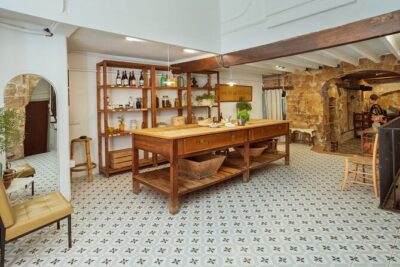
4-Hour Market Visit and Traditional Cooking Workshop in Palma
Read our review →
Browse the lists this tour appears in