
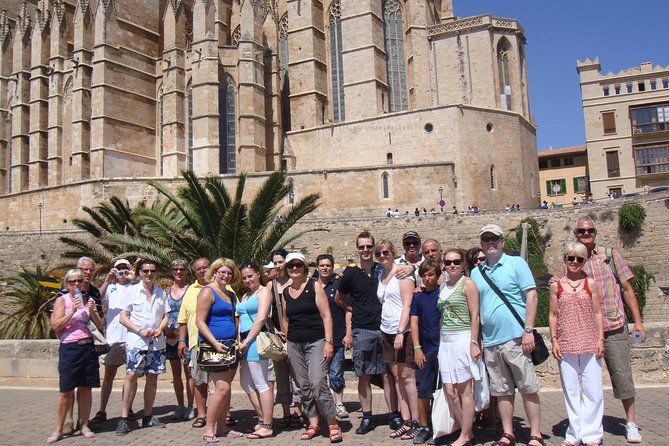
Reviewed · PALMA OLD TOWN WALKING TOURS
Private Tour: Palma de Mallorca Old Town
Palma’s Old Town is best understood on foot, where a grand cathedral, former Islamic fortress, Jewish quarter, quiet courtyards, and Art Nouveau façades sit close together. This private walk gives you room to ask questions and steer the conversation, rather than follow a fixed script.
I like the personal pace and the chance to focus on what interests you, especially architecture, religion, or local history. I also like that guides such as Michael, Peter, and Jeanine have been praised for taking visitors beyond the main sights and pointing out details easy to miss alone.
The main drawback is practical: the meeting point near Parc de la Mar may be a long taxi ride from the cruise port, roughly five miles according to one booking experience. Cathedral admission is also extra, and the tour’s advertised two and a half hours can feel short if you want to linger inside every landmark.
Key points to know before booking
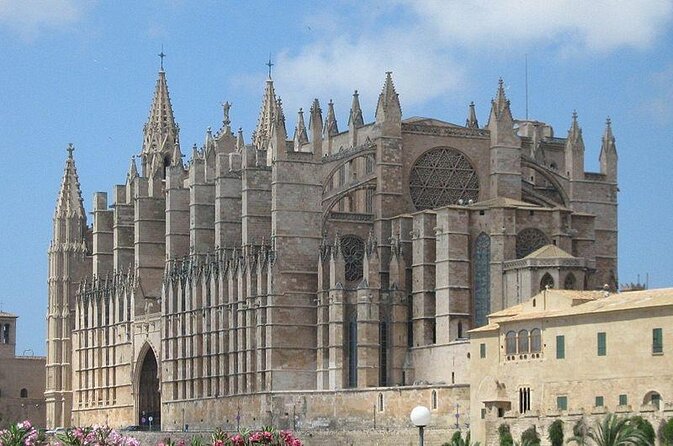
- A private walk through Palma’s layers: See Islamic, Jewish, Christian, and Modernist influences in one compact route.
- The Cathedral is mainly an outside stop: You can upgrade to enter La Seu, but admission is not included in the basic price.
- Guides can shape the conversation: Jeanine has focused on architecture, while Michael and Peter have been praised for history, humor, and a relaxed pace.
- The Old Town rewards slow walking: Expect winding lanes, courtyards, churches, fountains, and frequent photo stops.
- Cruise passengers need a transport plan: The central meeting point is not at the cruise terminal.
- Value depends on group size: At $165.19 per person, the private format makes more sense for several people sharing a guide than for a solo visitor.
A useful first look at Palma’s Old Town
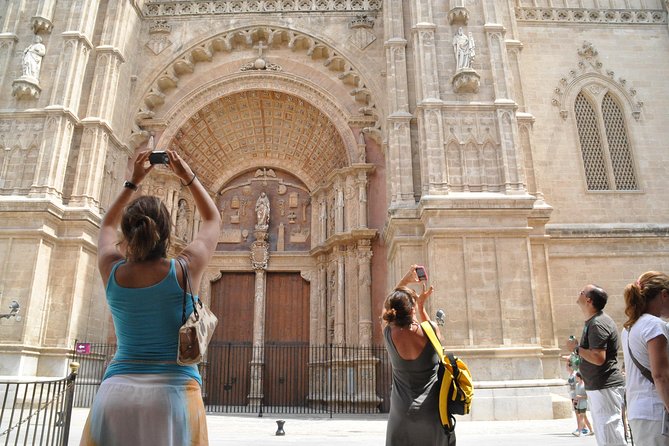
Palma is a city where the past is stacked rather than separated. An Islamic fortress became a royal palace. A cathedral rose on the site of a mosque. Christian convents, the old Jewish quarter, and Modernist buildings all sit within a manageable walking area.
That makes this tour a good first introduction. You are not simply checking off one monument. You are being shown how different eras shaped the same streets.
The walk begins near Parc de la Mar, beside the broad open area in front of the cathedral. This is a sensible place to start because you get an immediate view of La Seu, the palace, and the old city rising behind them.
Your guide meets you at the central location on Carrer del Moll. You then set off on foot. Hotel pickup and drop-off are not included, so you must reach the meeting point yourself and return there at the end.
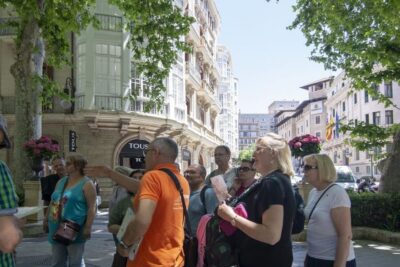
The route is designed for questions. If you care about architecture, ask for more detail on styles and façades. If you prefer political or religious history, say so early. One especially strong experience came from a guide tailoring the walk almost entirely around Palma’s architecture and taking the group away from the usual tourist path.
More to do in Palma:
- Palma: Cathedral of Mallorca Skip-the-Line Entry Ticket
★ 4.6 · 14,386 reviews - Palma de Mallorca: 5-Hour Catamaran Cruise with Lunch & Swim
★ 4.5 · 9,957 reviews - Palma de Mallorca: City Sightseeing Hop-On Hop-Off Bus Tour
★ 4.1 · 4,450 reviews
Parc de la Mar and the first cathedral view
The opening 15 minutes around Parc de la Mar are less about covering ground and more about getting your bearings. The park gives you space to frame photographs of Palma Cathedral, especially its enormous exterior and position beside the water.
This is also where your guide can explain the city’s monumental area before the route narrows into the Old Town. You can ask broad questions at this point, such as how Palma changed from Islamic rule to Christian rule, or how the island’s architectural styles developed.
The stop is free, but do not mistake that for a quick photo-only visit. A good introduction here gives the rest of the walk a clear thread. You begin to see the cathedral, Almudaina Palace, and Old Town streets as parts of one historical center.
If you arrive by cruise ship, allow extra time and budget for a taxi. The meeting point is not beside the port, and one family found the distance especially awkward with a stroller and a young child. Ask for a vehicle large enough for your group and luggage or stroller before setting off.
La Seu, from Islamic mosque site to Modernist interior
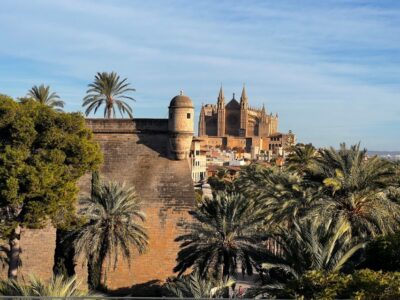
Palma Cathedral is the visual centerpiece of the route. The basic tour includes a stop outside for photographs and an explanation of the site’s earlier Islamic foundation. The cathedral was built where an Arabian mosque once stood, making the location itself part of the story.
The outside stop is listed at about 15 minutes. That is enough for an introduction and photographs, but not enough for a careful interior visit. If La Seu matters to you, select the option that includes admission.
Inside, the important details include the circular stained-glass windows, the huge scale of the nave, and features linked to Antoni Gaudí. His Modernist work at the cathedral includes an eye-catching altarpiece that can divide opinion, which is part of what makes it worth seeing. You are not just looking at a medieval church. You are also seeing a later artist reshape the interior.
Cathedral admission is not part of the standard tour price. That matters when comparing the total cost, especially if you are booking for a family. It is sensible to arrange entry in advance if you know you want to go inside, since one strong recommendation from the experience is to secure cathedral tickets before the tour date.
Almudaina Palace and Palma’s Islamic foundations
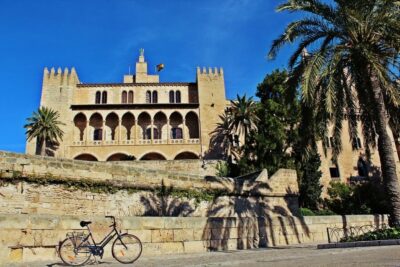
The route passes the Palau de l’Almudaina, a former Arabian fortress that later became a royal residence. Even from outside, it helps explain Palma’s layered identity. The palace is not an isolated medieval building. It is a reminder that the city’s present form grew from earlier Islamic foundations.
The walk then turns into the older streets. This is where the private format earns its keep. A guide can slow down for a courtyard, explain a church doorway, or answer a question without holding up a large group.
The stated visit near the palace and surrounding Old Town lasts about 10 minutes in the outline, but the full route naturally spreads the Old Town portion across much longer. The advertised tour lasts approximately two and a half hours, while the stop descriptions suggest that timing may shift. Treat the schedule as an approximate walking experience rather than a minute-by-minute program.
More walks through Palma old town:
- Palma de Mallorca: Guided Tour of the Old Town
★ 4.9 · 822 reviews - Palma de Mallorca: Old Town Atmospheric Evening Tour
★ 4.8 · 706 reviews - Palma de Mallorca Old Town Guided Bike Tour (Small Groups)
★ 4.6 · 563 reviews - Palma de Mallorca: Foodie Walking Tour of the Old Town
★ 4.6 · 372 reviews
Courtyards, Arab Baths, and the quieter lanes
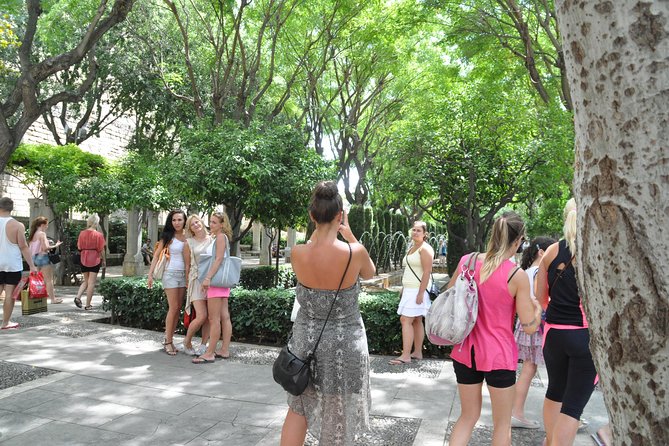
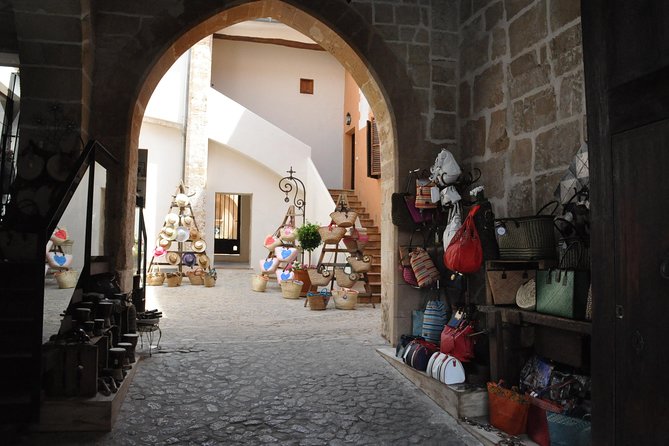
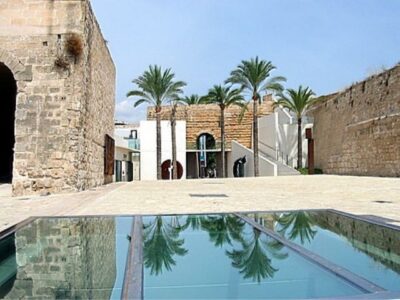
Palma’s most appealing moments often come between the headline sights. The Old Town has twisting lanes, 16th-century courtyards, trees, fountains, convent walls, and small architectural details that can disappear if you rush.
The Convent of Santa Clara and the Arab Baths are two useful examples. They show a quieter side of the city than the cathedral plaza. Your guide provides the context that makes these places meaningful, especially when the buildings are not immediately obvious from the street.
The Arab Baths are particularly valuable in a city tour because they connect Palma to its Islamic past in a direct, physical way. You can see how a smaller historic site feels different from the huge cathedral and palace. The contrast gives the walk variety.
The lanes are also where the route can become physically tiring. This is a walking tour, not a sightseeing drive. The pace can be adjusted, and one guide was praised for taking things slowly on a very hot day, but you should still expect plenty of time on foot. Comfortable shoes and water are practical choices.
The 16th-century Jewish quarter
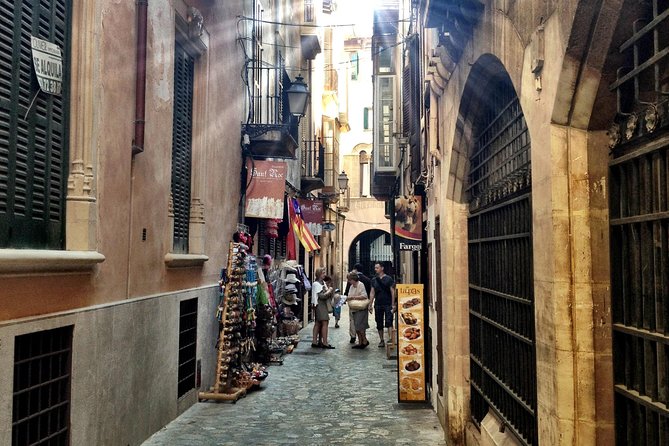
The Jewish quarter is one of the tour’s most distinctive subjects. The walk explores the old 16th-century quarter and discusses Mallorca’s Jewish heritage as well as the community living on the island today.
This section adds something many quick Palma visits lack. Instead of treating the city as only a Christian or royal center, it brings attention to a community that shaped local life and then faced major changes over time.
The value here depends heavily on the guide’s ability to explain rather than simply point out streets. The private arrangement helps because you can ask for clarification and request more time on the subject. If religious history, minority communities, or urban change interests you, tell your guide at the beginning.
Do not expect a museum-style presentation. This is a street walk through an old quarter, with history attached to the buildings and lanes around you. That makes the discussion more connected to place, but it also means the amount of detail can vary with the guide and the questions you ask.
Palma’s Art Nouveau side
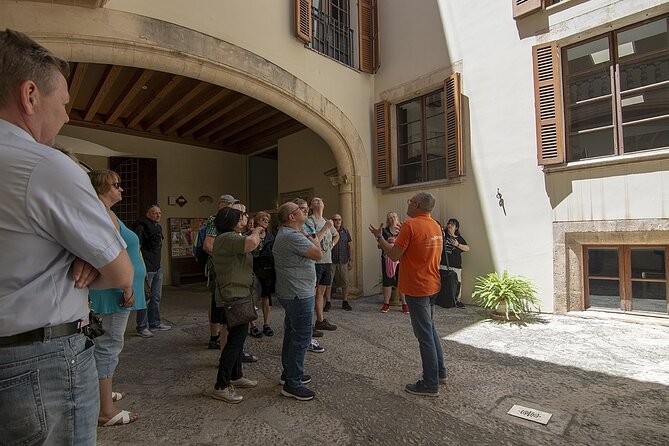
The final major theme is Palma’s Modernist, or Art Nouveau, architecture. The route looks at the city’s later development and the decorative buildings that appear among the older streets.
This is a strong counterpoint to the Jewish quarter, Arab Baths, and medieval religious sites. You get a sense of Palma not as a preserved relic, but as a city that kept changing. A guest who asked Jeanine to focus on architecture received a detailed look at different local styles and a route that went beyond the most obvious streets.
If façades interest you, ask your guide to identify specific features rather than giving only broad labels. The private format makes that possible. You can stop for photographs, compare buildings, and spend less time on subjects that do not matter to your group.
The Art Nouveau portion may appeal most to repeat visitors or people who have already seen La Seu. It gives you a reason to look upward and pay attention to balconies, ornament, and building fronts rather than moving straight from one famous monument to the next.
What the private format is really worth
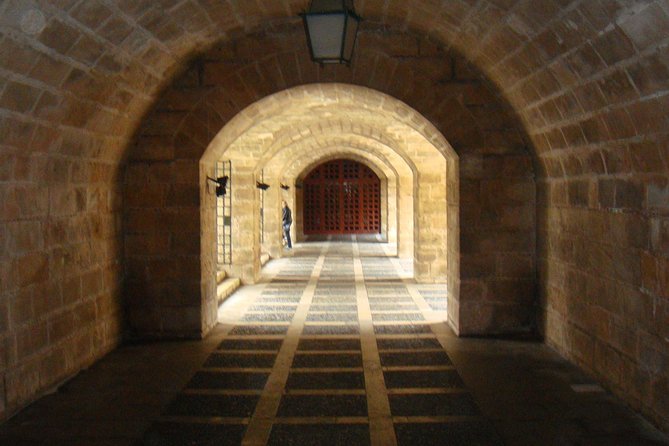
The price is $165.19 per person, with group discounts noted. That is a serious cost for a two-and-a-half-hour walk, but the calculation changes if several people are sharing the experience and want a guide to themselves.
The main benefit is not speed. It is control. You can ask more questions, request a slower pace, focus on architecture, or spend extra time on Jewish history and the cathedral. A large group cannot adjust as easily.
Several guides have received especially warm praise for different strengths. Michael has been described as funny, engaging, and strong on history and architecture. Peter has been praised for a relaxed pace and for taking photographs, though one experience found him difficult to hear and less prepared for questions. Jeanine has been noted for detailed architecture commentary and certified guiding experience.
Those differences are worth keeping in mind. A private booking does not guarantee that every guide will deliver the same depth or style. One scheduled guide failed to appear, and another booking had to be adjusted when the original guide became ill. The replacement guide was well prepared, but the choice became either a non-private option or cancellation.
The overall rating is 4.4 from 32 reviews, which suggests a strong experience with a few important service and communication problems. I would book for the private access and flexible discussion, not because the format guarantees perfection.
Who should take this walk
This tour suits first-time visitors who want Palma explained in a compact block of time. It also works well for families or friends who prefer their own pace and do not want to join a large group.
You will get the most from it if you enjoy asking questions. The guide can customize the commentary, but you need to say what you want. Mention architecture, local food, religious history, Jewish heritage, or photography at the start.
It is also a good choice for cruise passengers who want a focused introduction before exploring independently. Just handle the port transfer carefully and leave a generous buffer if your ship is delayed. One group still enjoyed the tour after rough seas delayed docking by more than two hours, but that kind of day requires flexibility.
This is less suitable if you want long interior visits at several monuments. The standard arrangement focuses on walking and outside views, and cathedral entry costs extra. It may also be poor value for a solo visitor who can join a less expensive group walk.
Practical details that affect your day
The tour is offered in English and includes a local guide. It is a private activity, so only your party participates. Most people can take part, and the meeting point is near public transportation.
The starting address is Carrer del Moll, 1, in central Palma, near Parc de la Mar. The activity ends back at the same meeting point. There is no hotel pickup or drop-off.
The route may change because of weather, timing, or safety. That is reasonable for a walking tour in an old city, where street conditions and heat can affect the pace. Plan for outdoor walking, regular stops, and some uneven or narrow streets.
Free cancellation is available up to 24 hours before the start time. Changes or cancellations inside that window are not accepted for a refund. Confirmation is sent within 48 hours, subject to availability.
Should you book the Palma Old Town private tour?
Book it if you want Palma’s main sights tied together by one guide, especially if your group cares about architecture, Jewish heritage, or the city’s Islamic and Christian layers. The private format gives you the best chance of turning a standard sightseeing route into a conversation shaped around your interests.
Before paying, check the total cost with cathedral admission and transport from your hotel or cruise terminal. For a group of several people, the price can be reasonable for a private guide. For one or two people, a group walk may offer better value.
I would also confirm the meeting point carefully, plan for the port transfer, and tell the guide what you want to study. Do that, and this can be a thoughtful first walk through Palma rather than a quick march between monuments.
FAQ
How long does the Palma Old Town tour last?
The advertised duration is approximately two hours and 30 minutes. Timing can change because of weather, safety, and the pace chosen for the group.
Where does the tour start?
It starts at Carrer del Moll, 1, Centre, 07012 Palma, near Parc de la Mar.
Where does the tour end?
The activity ends back at the meeting point in central Palma.
Is hotel pickup included?
No. Hotel pickup and drop-off are not included.
Is the tour private?
Yes. Only your group participates in the private activity.
Is the tour offered in English?
Yes. English is the listed tour language.
Is admission to Palma Cathedral included?
Not in the basic tour. You can upgrade to include entry to the cathedral.
What can you see inside the cathedral?
The interior includes large stained-glass windows, Gaudí-designed features, and a Modernist altarpiece.
Is the tour suitable for most people?
Most people can participate, according to the activity information. It is a walking tour, so expect to spend the experience on foot.
Can you cancel for a full refund?
Yes, if you cancel at least 24 hours before the local start time. Cancellations made less than 24 hours before the tour are not refunded.
Newest Mallorca write-ups
- VISIT BODEGAS BORDOY ,DEGUSTACION 5 WINES, FINGER FOOD★ 5.0 · 3 reviews
- Palma: Private Guided Segway Tour★ 4.9 · 15 reviews
- V8 Trike Tour mit Fahrer/Guide für max 4Gäste★ 5.0 · 40 reviews
- Tramuntana Panorama Tour – Soller, Deiá, Valldemossa★ 4.9 · 34 reviews
- Travel and play tennis in Mallorca★ 5.0 · 5 reviews
- Tour Beach Portal Vells, Cave Portal Vells.★ 5.0 · 7 reviews
- Mallorca Shore Excursion Bellver Castle and Cathedral Private Tour★ 5.0 · 4 reviews
- Palma de Mallorca Shore Excursion: Palma, Deia and Sa Foradada★ 4.5 · 10 reviews
Palma Old Town Walking Tours, compared.
Palma de Mallorca Old Town Guided Bike Tour (Small Groups)
Read our review →

Browse the lists this tour appears in