
Reviewed · MALLORCA COASTEERING TOURS
Coasteering in South Mallorca with Transfers
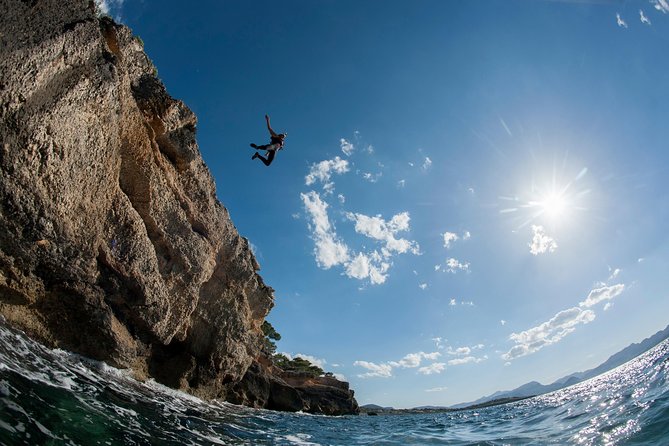
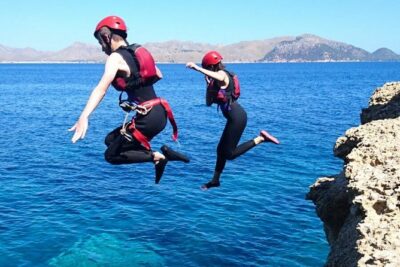
The main attraction here is simple: you move along Mallorca’s rocky coast by jumping, swimming, climbing, and rappelling, rather than viewing the cliffs from a boat or beach. Jumps build from about 2 meters to as high as 12 meters, and you can skip any height that feels wrong.
I like the small groups of up to 10 and the way guides introduce the activity step by step. I also like that pickup, equipment, insurance, and transport are included, which makes a fairly technical activity easy to arrange. The main caution is that this is physical work on sharp, uneven rock. Rough water, exposed heights, and basic meeting arrangements can make the day feel tougher than the four-hour schedule suggests.
Key points to know before booking
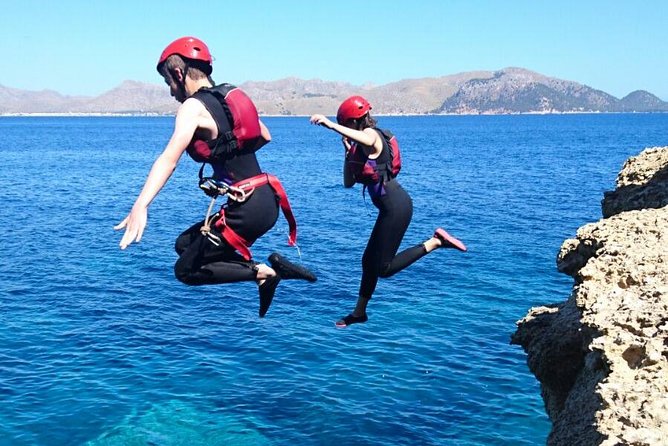
- Progressive cliff jumps: Start low, then choose higher jumps up to 12 meters.
- More than jumping: Expect swimming, scrambling, sea caves, rappelling, and a short zip line.
- Pickup covers much of south Mallorca: Transfers run from the Puig de Ros area along the coast toward Andratx, with other zones handled separately.
- Equipment is supplied: Wetsuit, helmet, buoyancy aid, shoes, and other safety gear are included.
- Guide quality matters: Guides including José, Joni, Mario, Niko, Rafael, Alfonso, Naco, and Gemma have been praised for patience and encouragement.
- Bring very little to the rocks: A swimsuit, sun protection, water, towel, and perhaps a waterproof phone case are the useful basics.
What coasteering in Mallorca really involves
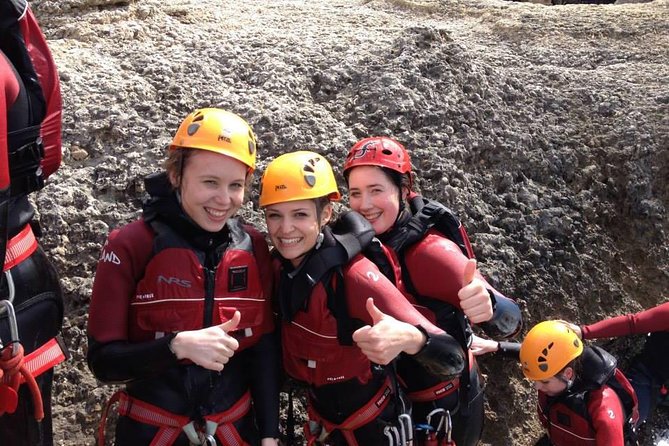
Coasteering is not a gentle coastal walk with an occasional swim. It is a moving outdoor course where the sea becomes your route and the cliffs become your playground. You may rappel from a rock ledge, swim into a cove, scramble across a cliff face, climb out of the water, and then jump back in from a higher point.
The exact route can change with weather and sea conditions. The advertised area is in northern Mallorca, although pickup is arranged from southern resorts and the activity information also lists separate northern and eastern zones. This matters when booking: choose the correct pickup area rather than assuming every departure follows the same route.
The experience lasts about four hours, though individual accounts describe the active portion as roughly three and a half hours. You have a choice of morning or afternoon departure, with the listed start time at 10 a.m. The day is active from the first walk toward the coast, so do not treat the transfer as the only demanding part.
More coasteering and cliff jumping in Mallorca:
- Mallorca: Quad Bike Tour, Snorkeling, and Cliff Jumping
★ 4.8 · 2,294 reviews - Mallorca: Kayaking, Sea Cave, Cliff Jumping & Snorkel Tour
★ 5.0 · 769 reviews - Mallorca Half-Day Coasteering Experience
★ 4.8 · 378 reviews
From your hotel to the rocky coast
Pickup is offered from parts of south Mallorca, from Puig de Ros along the coast toward Andratx. Meeting points can also be arranged for apartment and vacation rental stays. The listed meeting point is at Carrer de Cala Fornells 30 in Cala Fornells, but this functions as a departure point rather than a polished visitor center.
Be clear about where you are staying when you book. The instructions specifically separate northern clients around Alcudia from eastern clients around Cala d’Or and Cala Ratjada. Selecting the wrong zone can create confusion, especially because the activity takes place in different coastal areas depending on the pickup region.
The minivan transfer is a real part of the value. You do not need to rent a car, find an unfamiliar cove, or carry climbing equipment across Mallorca. On the other hand, the meeting arrangement may feel informal. One account describes confusion in a one-way town, with no obvious office or sign and no clear place to change before the van arrived.
I would arrive early, keep your phone available, and confirm the exact pickup instructions through the operator. Do not assume the meeting point has toilets, lockers, or changing rooms. You may be changing near the van, so wear your swimsuit under comfortable clothing.
Getting fitted for the equipment
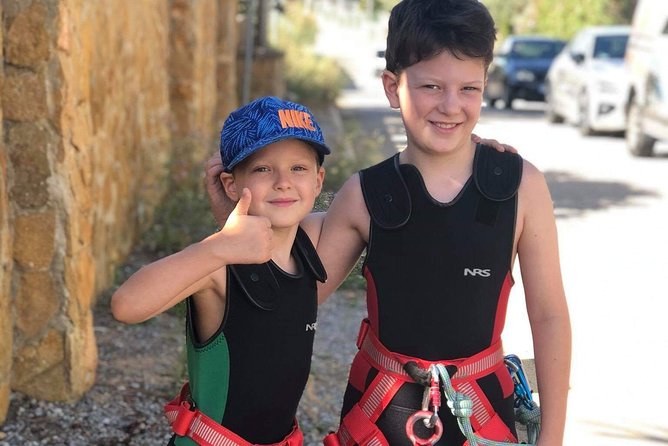
The operator provides a wetsuit, helmet, buoyancy aid, shoes, and the other equipment needed for the activity. Insurance and a qualified local guide are included. You must provide your height, weight, and shoe size when booking so the team can prepare the right kit.
A full-length wetsuit has two jobs here. It offers some warmth, but it also protects your skin from rough rock. Several descriptions refer to padded wetsuits and water shoes, which is welcome because the route includes repeated contact with stone, not just open-water swimming.
The footwear deserves attention. One complaint raised serious concerns about the grip of the supplied plastic-soled shoes. The provider replied that participants may bring their own shoes and that the supplied footwear is used regularly. The broader lesson is practical: inspect the shoes before entering the water, ask about alternatives if the fit or grip seems poor, and bring suitable hiking shoes as requested if you have them.
Do not wear flip-flops for the activity itself. One account says flip-flops can be worn during arrival and exchanged for the supplied shoes, but they are not appropriate for scrambling on cliffs. Comfortable clothes and hiking shoes are recommended for the approach.
The first jumps build confidence
The guide usually begins with lower jumps, often around 2 or 3 meters, before offering higher options. This gradual start is one of the best features of the experience. You learn how to approach the edge, enter the water, and listen for instructions before facing the taller cliffs.
The advertised range runs from 2 meters to 12 meters, or about 6 to 39 feet. Not everyone will reach the highest point, and you do not have to. Guides have helped nervous participants stay with smaller jumps, swimming, and climbing instead of forcing a decision.
That flexibility matters. A 9-meter jump can sound manageable on paper, but the height feels different when you are standing at the edge with open water below. Guides such as Naco and José have been praised for starting gently, explaining where to step, and encouraging people without turning the activity into a contest.
You may also see more confident members of the group attempt backflips or other tricks. Those are optional and not part of what you need to do. The safest approach is to copy the guide’s instructions and choose a jump that feels challenging but sensible.
More private transfers in Mallorca:
- Mallorca: Cova des Coloms Caving Trip with Hotel Transfer
★ 4.9 · 1,739 reviews - Mallorca: Island Tour with Boat, Train, and Hotel Transfer
★ 4.4 · 437 reviews - Palma: Palma Aquarium Ticket with Transfer Service
★ 4.0 · 103 reviews - Mallorca: Palma Aquarium Tickets with Transfer
★ 4.1 · 43 reviews
Swimming into coves and sea caves
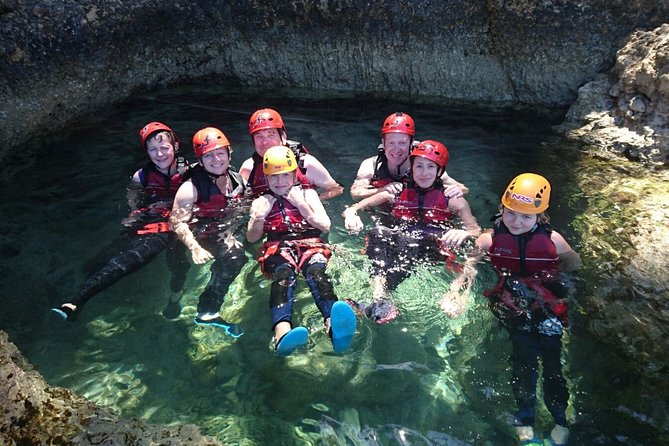
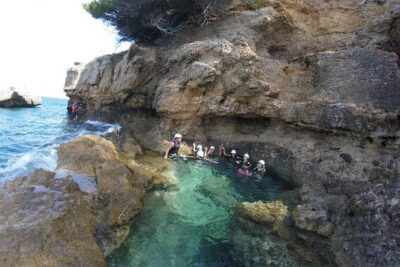
Between jumps, you swim around the rocky coast and into pools or sea caves. The water is described as clear and attractive, but conditions can be rougher than expected. Waves can make even a short crossing tiring, especially after climbing or jumping.
The route is not a long-distance swim. Still, you should be comfortable in open water and ready to move while wearing a wetsuit, helmet, and buoyancy aid. The water may feel cool, and the rocks can be slippery or sharp, which is why the supplied protective equipment matters.
Your group may leave bags in one spot and return to them as the route shifts. That makes it possible to carry a waterproof phone case or small camera, but you should not expect the operator to provide professional photos. One person wished for an optional GoPro photo service, and several others were glad they had waterproof phone cases.
Use reef-safe sunscreen before you put on the wetsuit. Your hands will be doing real work, and repeated climbs out of the water can leave them sore the next day. One participant specifically noted beaten-up hands after the activity, a useful warning for anyone unused to scrambling.
Rappelling, scrambling, and psicobloc
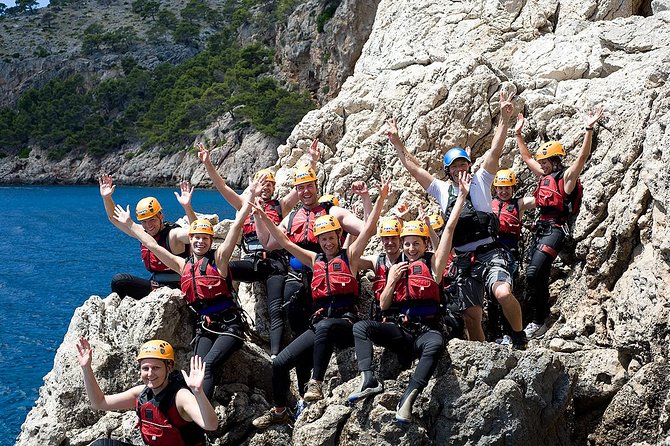
The climbing portions are generally closer to scrambling and bouldering than to a long, roped climbing route. You move along rock near the water, sometimes only a short distance above the sea, with a clean drop into the water below. This style is often called psicobloc, or deep-water free soloing.
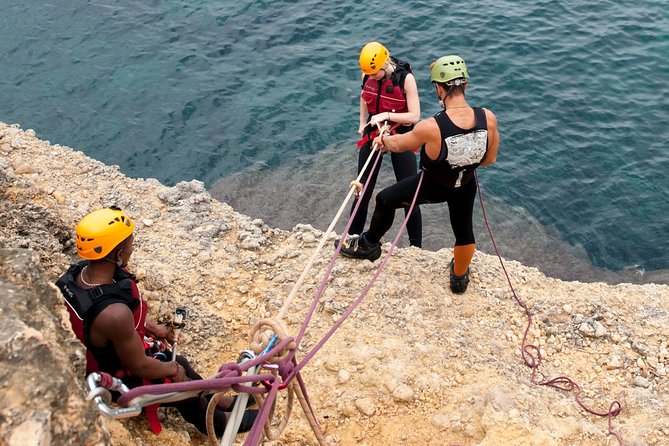
Some sections involve lowering yourself with a climbing rope and rappel device. Other sections require hand and foot placement on the rock without a belay. You do not need to be an expert climber, but strength, balance, and comfort with uneven ground help.
One family with teenagers found the climbing satisfying and manageable, while another account described the rock work as the hardest part of the day. That is a fair description. The jumps offer a quick burst of courage, but scrambling requires steady effort and repeated climbs from the water.
The guide stays close and gives instructions about where to step and how to move. Even so, this is not an activity for someone who wants a fully controlled, low-effort excursion. If you dislike heights, you can still enjoy lower jumps and the water, but you should be honest about your comfort level before you start.
The improvised zip line
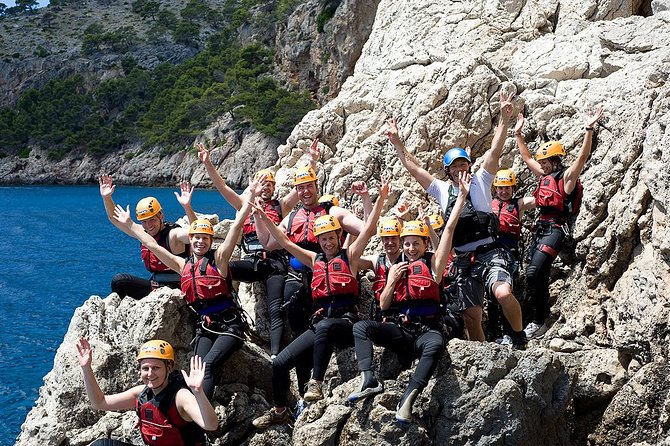
The zip line is one of the most memorable elements, but it is not necessarily a permanent installation. Guides may set up a short line between cliffs for the group, depending on the route and conditions.
Several accounts describe swimming and climbing to reach the line, then riding into the water. That approach can be more difficult than the zip line itself. You are not simply walking up to a platform, taking a seat, and gliding across. You may need to climb over rock and follow a safe route out of the water afterward.
The guide’s judgment is important here. Naco, Mario, and Niko were praised for adapting the course to the group and creating a zip-line setup that suited the conditions. The activity is therefore partly fixed and partly shaped on the day by the guide, sea, and abilities of the group.
If the zip line is a major reason you are booking, keep expectations flexible. It is an extra feature within a coasteering route, not a guaranteed large aerial attraction.
How good is the guiding?
The strongest pattern across the experience is the guide’s role. Names associated with particularly positive feedback include José, Joni, Mario, Niko, Rafael, Alfonso, Naco, and Gemma. The praise is consistent: patient instruction, calm support, and a willingness to adjust the course for beginners and more confident participants.
That makes sense for an activity where fear is part of the experience. A good guide can turn a frightening 3-meter jump into a manageable achievement by showing you where to stand and how to enter the water. A poor explanation would make the same jump feel reckless.
Guides speak Spanish and English at minimum, and the operator tries to provide requested languages when possible. French is not guaranteed, so you should be able to follow instructions in English or Spanish. The safety briefing is not the time to rely on gestures.
Groups are capped at 10 people. That is small enough for a guide to watch each jump, but the pace may slow when people have different confidence levels. Families, couples, and solo participants can all fit into the format, provided everyone accepts that the group will move together.
Price and what the $90.51 covers
At $90.51 per person, this is not a cheap swim, but the price includes more than the active session. You also receive hotel pickup and drop-off, minivan transport, guide services, equipment, insurance, and the use of a coastal site that would be difficult to arrange independently.
For a first-time visitor, that package has good practical value. Buying or renting suitable climbing and water equipment, finding the route, judging sea conditions, and organizing a safe sequence of jumps would be complicated. The transfer also saves you from navigating narrow coastal roads and searching for parking.
The value is weaker if you already have a car, climbing gear, and local knowledge, or if you want a long point-to-point coastal trek. One account expected to travel along a larger stretch of coastline but found the main activity concentrated around one coastal area, with several jumps from the same general spot.
You are paying for instruction, equipment, and access to a guided challenge, not for a full-day sightseeing tour. That distinction helps set the right expectation.
Who should book it?
I would recommend this to active families with children aged 8 and above, couples, solo participants, and first-time adventurers who want a serious physical outing without signing up for advanced climbing. The minimum age is 8, and large groups can be tailored, but children should be comfortable swimming, following instructions, and walking over rough ground.
It suits you if you like the idea of gradually testing yourself. It is less suitable if you want a calm beach day, dislike open water, or cannot manage climbing and repeated movement over uneven rock.
Bring a swimsuit, towel, bottled water, sunscreen, and your own lunch as requested. In practice, the lunch may remain untouched because the active session keeps moving, but a small snack for the drive home is sensible. Leave valuables behind and use a waterproof phone case only if you are prepared to protect it properly.
The experience requires good weather and a minimum number of participants. If weather cancels the outing, you can choose another date or receive a full refund. You can also cancel for a full refund up to 24 hours before the start time. Last-minute cancellations and changes are not accepted.
Should you book this Mallorca coasteering trip?
Book it if you want to earn your views through action. The combination of progressive jumps, sea caves, scrambling, swimming, rappelling, and a short zip line gives you much more variety than a standard beach excursion. The guides appear to be the key strength, particularly for beginners who need calm, clear coaching.
Think twice if you expect a long coastal expedition, polished changing facilities, or a guaranteed major zip line. Confirm your pickup zone, bring suitable footwear, and ask to inspect the equipment before setting out. For an active half-day with transport included, this is a strong choice for people who want Mallorca’s coast at close range, one jump and scramble at a time.
FAQ
How long does the coasteering experience last?
The activity lasts approximately four hours, with the active portion described in some accounts as around three and a half hours.
Where does the activity take place?
You travel from south Mallorca to the northern part of the island for the coasteering session. Separate zones are provided for clients near Alcudia, Cala d’Or, and Cala Ratjada.
Is hotel pickup included?
Yes. Pickup and drop-off are included for designated areas in south Mallorca, from Puig de Ros along the coast toward Andratx. Meeting points can be arranged for apartment and vacation rental stays.
What time does the tour start?
The listed start time is 10 a.m. Morning and afternoon departure options are offered.
How high are the cliff jumps?
Jumps range from about 2 meters to 12 meters, or approximately 6 feet to 39 feet. You can progress gradually and choose whether to attempt higher jumps.
Do I have to complete every jump?
No. The guides can offer lower jumps and other parts of the activity, such as swimming and climbing, if you do not want to attempt a particular height.
What equipment is included?
A wetsuit, helmet, buoyancy aid, shoes, and other necessary equipment are included. Insurance and a qualified local guide are also provided.
What should I bring?
Bring comfortable clothes, hiking shoes, sunscreen, bottled water, your own lunch, a swimsuit, and a towel. A waterproof phone case can help if you want to take photos.
What is the minimum age?
The minimum age is 8 years old. Most participants can take part, but the activity requires comfort with swimming, climbing, jumping, and rough ground.
What happens if the weather is poor?
The experience requires good weather. If it is canceled because of poor conditions or because the minimum number of participants is not met, you can choose another date or receive a full refund.
Newest Mallorca write-ups
- SUP tour from Palma to Mondrago Beach and Samarador★ 5.0 · 11 reviews
- Palma Jump ticket★ 4.0 · 17 reviews
- Mallorca Blue Cave Boat Tour with Snorkel★ 4.5 · 26 reviews
- Safari Alcudia Jack Sparrow cave tour 90MIN★ 4.0 · 20 reviews
- Afternoon Snorkel & Paddle Surf Experience in a Secret Spot★ 5.0 · 8 reviews
- Extreme e-scooter off-road excursions★ 5.0 · 3 reviews
- FUN Quad Mallorca★ 4.5 · 33 reviews
- Guided Kayak Tour from Sant Elm to Sa Dragonera★ 4.5 · 11 reviews
Mallorca Coasteering Tours, compared.
Kayaking, Sea Cave, Cliff Jumping & Snorkel Tour
Read our review →
Small-Group Cliff Jumping Experience in Mallorca
Read our review →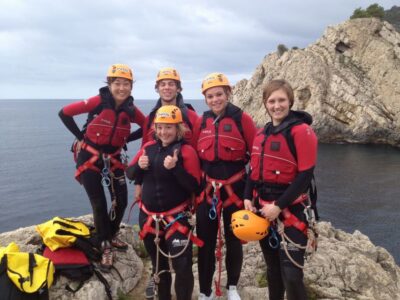
Shore Excursion: Coasteering in Mallorca
Read our review →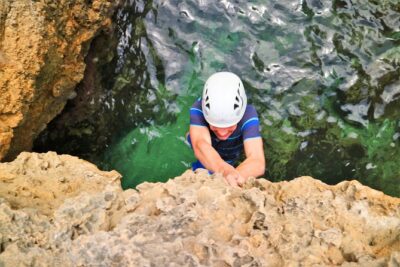
Browse the lists this tour appears in