
Reviewed · MUSEUMS
Els Calderers House Museum in Mallorca
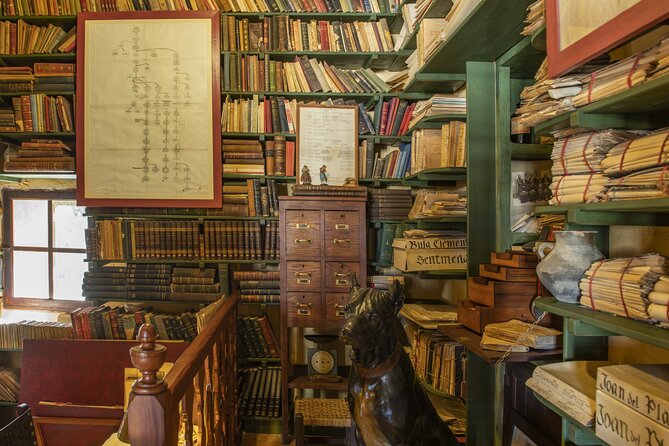
Els Calderers takes you far beyond the usual pretty-house visit. This 18th-century country estate preserves more than 30 rooms, working areas, farm tools, carts, mills, and animal enclosures, giving you a practical picture of old Mallorcan estate life. I especially like the authentic rooms and objects, and I like that the visit includes the less-polished working spaces, from the bread oven to the blacksmith shop.
The main drawback is the animal area. Conditions have drawn serious concern, particularly the size and bareness of some pens and the treatment of certain animals. The house itself is the stronger part of the experience, so I would book it for the architecture and domestic history, while taking a careful look at the farm section before deciding how long to stay there.
Key points before you go
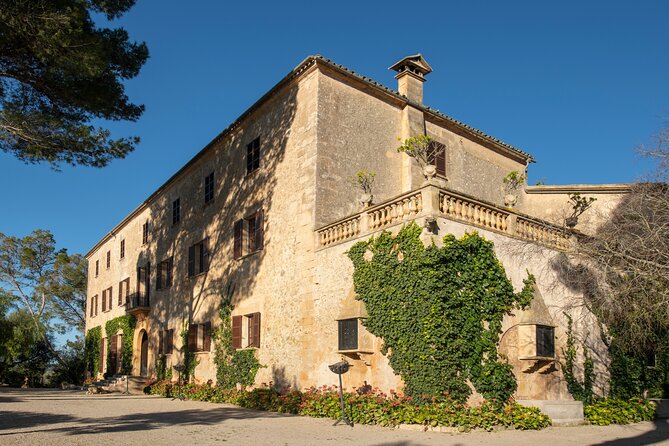
- More than 30 rooms: See the chapel, priest’s office, bedrooms, kitchen, cellar, laundry, workshops, and storage areas.
- A working estate, not just a mansion: The final section includes a flour mill, carpentry and blacksmithing areas, farm machinery, corrals, and carts.
- Useful English information: An English sheet gives short notes on the principal rooms, though the numbering may become confusing after the kitchen.
- About three hours: The visit is self-paced and includes both the house and extensive outdoor areas.
- Free parking: You drive to the estate’s meeting point at Finca Els Calderers near Sant Joan.
- Animal welfare needs thought: The farm animals add context, but the enclosures have been criticized as bare or uncomfortable.
What Els Calderers tells you about Mallorca
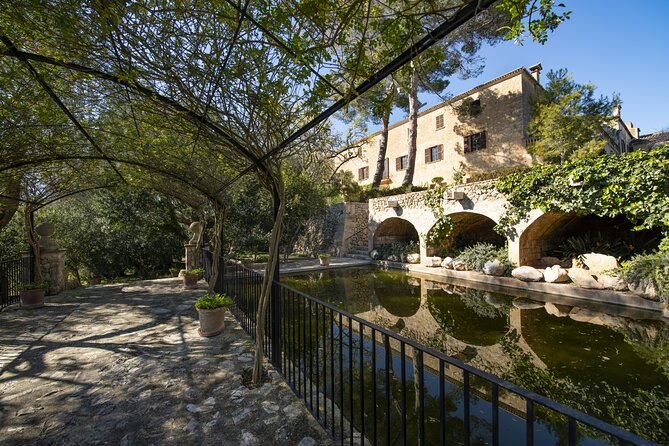
Els Calderers is best understood as a country estate that functioned as a small world of its own. The house, chapel, food areas, workshops, farm buildings, and animal yards all belong to the same story. Instead of seeing only where an affluent family slept, you can follow how the estate was organized and maintained.
The property dates from 1750 and is described as having belonged to a Spanish noble family. That background helps explain the unusual mix of formal rooms and working spaces. The estate needed a resident priest, domestic staff, storage areas, farm equipment, animals, and rooms divided by household role.
I find that arrangement more useful than a simple parade of grand furniture. The house shows how comfort depended on a large amount of work happening out of sight. At Els Calderers, much of that work is brought back into view.
The visit is offered in English, but it does not appear to be built around a named English-speaking guide. You receive an English information sheet with a sentence or two about the main rooms. That works well for independent sightseeing, though it gives you less background than a full guided tour.
More museums and galleries in Mallorca:
- Manacor: Rafa Nadal Exhibition Entry Ticket
★ 4.6 · 836 reviews - Skip the Line: Rafa Nadal Museum Xperience
★ 4.0 · 196 reviews - Alcudia: Museum Sa Bassa Blanca Entry Ticket
★ 4.5 · 30 reviews
The first five rooms: chapel, priest, and cellar
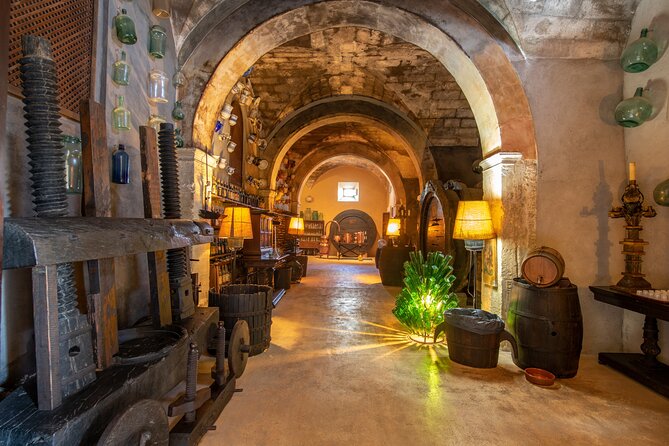
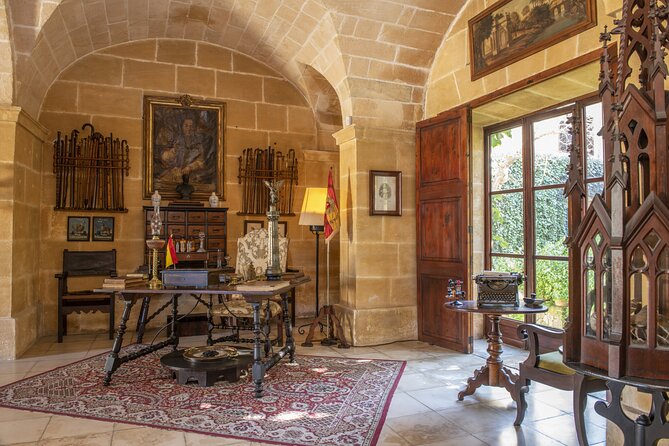
The tour begins on the ground floor with the hall, an additional reception hall, the priest’s office, the chapel, and the cellar. These rooms quickly establish the estate’s social and religious order.
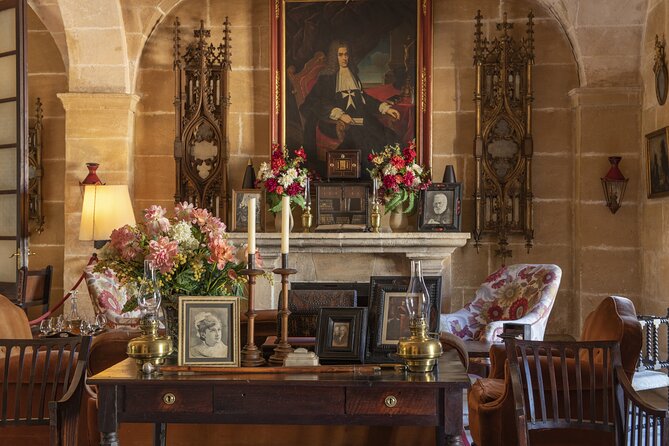
The chapel is one of the most distinctive stops. A private chapel tells you that religion was part of daily household life, not something reserved for a distant village church. The priest’s office adds another detail: the estate had space for a resident religious figure, which points to the family’s wealth and position.
The cellar provides a sharper change of mood. Here, the house connects to food, drink, storage, and the practical business of keeping a large household supplied. I like this early contrast between formal living and workaday necessities.
The rooms are cool inside, a welcome feature during Mallorca’s hot months. That cool interior is part of the building’s character, but it also means you may want a light layer if you are sensitive to temperature changes.
Bedrooms and private household life
From the ground floor, the route continues through the main bedroom and its related rooms. You’ll see a common room, a dressing room for the man, another room identified with the man of the house, a corridor, a toilet, and an ironing room.
The layout is revealing. Rather than presenting one grand bedroom as a complete picture of domestic life, Els Calderers separates sleeping, dressing, ironing, and shared household functions. Small rooms often tell you as much as the decorated ones.
The main bedroom and its furnishings give the visit a human scale. Period objects and clothing help show how the house was lived in, rather than leaving you with an empty shell. Several rooms are preserved with enough furniture and personal detail to suggest an inhabited home.
The ironing room is especially useful for understanding the labor behind formal clothing and household presentation. It is not a glamorous stop, but it makes the rest of the house easier to understand. Someone had to wash, press, repair, and prepare everything displayed in the more polished rooms.
Barns, kitchen, bar, and the less formal side
The middle part of the route moves through the barn, bedrooms, the mayoral office, the peasant kitchen, toilets, bar, souvenir area, bread oven, and laundry.
Here, the distinction between family life and estate work becomes clearer. The mayoral office reflects administration and supervision. The kitchen, laundry, and bread oven show the daily tasks that supported everyone on the property.
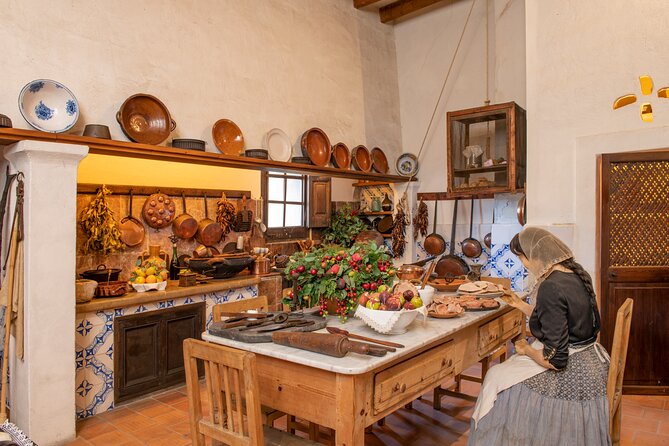
The peasant kitchen is likely to interest you more than another formal sitting room. It gives a better sense of food preparation and working routines, while the bread oven connects the house to the production of basic food on the estate.
The bar and souvenir area are less historic in feeling, but they are practical parts of the visit. One useful point: card payments were not available at the bar during one visit, so carrying some cash is sensible. That detail may have changed, but I would not rely entirely on a card.
The English information sheet is helpful, though the room numbering can become confusing after the kitchen. You can still follow the route, but do not expect a perfectly streamlined museum system. The charm here comes partly from the house’s preserved character, not from a slick modern interpretation.
Same island, a completely different afternoon:
- Palma: Cathedral of Mallorca Skip-the-Line Entry Ticket
★ 4.6 · 14,386 reviews - Palma de Mallorca: 5-Hour Catamaran Cruise with Lunch & Swim
★ 4.5 · 9,957 reviews - Porto Cristo: Caves of Hams Entry Ticket
★ 4.2 · 6,548 reviews - Palma de Mallorca: City Sightseeing Hop-On Hop-Off Bus Tour
★ 4.1 · 4,450 reviews
Workshops that show how the estate worked
The final indoor and outdoor sections are where Els Calderers becomes more than a historic residence. You’ll see carpentry and blacksmithing areas, machinery connected with carob and almonds, the pig slaughter room, corrals, a flour mill, equine animal areas, and a porch filled with carts and harnesses.
These spaces explain the estate’s independence. Wood needed repair, metal tools needed shaping, crops needed processing, animals needed care, and transport required carts and harnesses. The collection links the elegant rooms to the physical work that made the estate run.
The carob and almond machinery is particularly useful because it points to crops associated with Mallorca’s rural economy. The flour mill and bread oven continue that story, showing how grain could become food without the modern supply chain you take for granted.
The pig slaughter room may be uncomfortable for some people, but it is historically important. It presents food production in direct terms rather than hiding it behind a finished meal. I would not call this section decorative. It is blunt, practical, and part of the estate’s real working life.
The carts and harnesses are a strong finish. They help you picture movement around the property before motor vehicles replaced this equipment. Families, workers, goods, and farm produce all depended on animals and carts.
The farm animals: an important caution
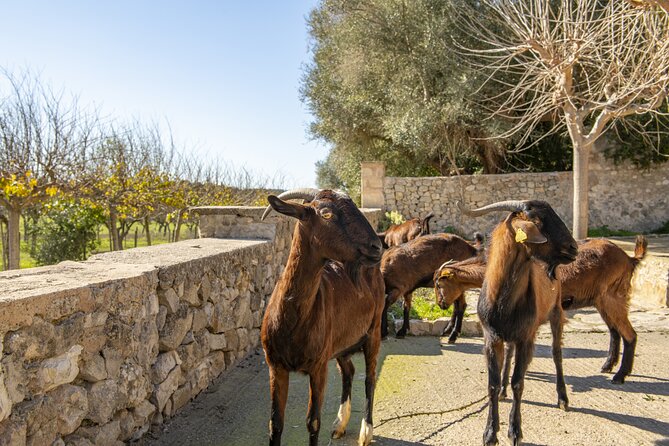
The outdoor corrals contain different animals, including horses, donkeys, cows, pigs, goats, and birds. Their presence makes the estate feel like a functioning farm, but it also creates the most serious question about the visit.
Some accounts describe bare pens, animals standing on concrete, limited bedding, and too little comfort in hot weather. Specific concern has been raised about a cow kept in a small area, goats and pigs without bedding, and a dog kept on a chain. Those are not minor aesthetic complaints. If animal welfare is a central concern for you, this part may affect your decision to enter.
Other observations describe clean pens, shade, water, and animals that appeared properly cared for. The horse and donkeys were described as having good body condition and appropriate feed, while the pens were said to be cleaned regularly. Conditions can change, and your own observations on the day matter.
I would approach the animal section with care. Look for shade, water, space, bedding, and signs of calm behavior. Do not treat the animals as a photo backdrop. The farm section adds valuable context, but it is also the least predictable part of the experience.
The orange grove has raised a smaller practical question. Bitter oranges may look edible but are not suitable for ordinary food use, so fallen fruit there may not indicate neglect. It is a reminder that a historic estate often preserves working plants for their original purpose, not simply as a manicured garden.
How long to allow and how to plan the visit
The stated duration is about three hours. That is reasonable if you read the information sheet, pause in the main rooms, inspect the workshops, and spend time outside. You could move faster through the house, but doing so would undercut the point of visiting such a large collection.
The group limit is 15 people, which should make a quieter visit possible when that limit is being followed. Large coach groups can arrive at the same time, and they may briefly make the main rooms busier. One account noted that two coach groups stayed only around 30 minutes, so crowd levels may shift during your visit.
Free parking is included at Finca Els Calderers, Camino Els Calderers, near Sant Joan. Private transportation is not included, so you need to arrange your own way to the property. The activity ends back at the meeting point.
Most people can participate, and service animals are allowed. The supplied information does not give detailed accessibility specifications for every room or outdoor surface, so anyone with mobility concerns should confirm the current conditions before booking.
Is the $10.81 admission good value?
At about $10.81 per person, Els Calderers offers a lot of material for the price. You are not paying just to enter a manor house. The admission covers the historic rooms, chapel, kitchen, workshops, machinery, mill, farm structures, carts, and animal area.
The value is strongest if you enjoy self-guided visits and ordinary details. A polished palace with dramatic decoration may give you more instant visual impact, but Els Calderers gives you a broader view of how an estate operated. You can spend several hours here without adding transport fees or a separate guided-tour charge.
The price feels less attractive if you expect a highly edited museum experience. Some displays may seem dusty or worn, and the information sheet is brief. The room numbering can also be confusing. You are paying for access to a preserved place, not for a modern museum installation with extensive labels.
For me, the admission is fair because the property covers so much ground and includes working spaces rarely shown in a formal house museum. Still, the standard of maintenance and animal care matters. If either issue is important to you, the low price alone should not decide the matter.
Who will enjoy Els Calderers most?
I would recommend Els Calderers to you if you like historic houses that show both comfort and labor. It suits anyone interested in Mallorcan rural life, traditional tools, old kitchens, farm machinery, domestic arrangements, or architecture.
Families may appreciate the variety. The visit changes character often enough to hold attention: bedroom, chapel, kitchen, barn, mill, carts, and animals. Younger children may find the farm equipment and corrals more interesting than the formal rooms.
Photography-minded visitors should find plenty to look at, from period interiors to machinery and outdoor buildings. The quiet setting also gives the visit a slower pace than a city attraction.
I would hesitate to recommend it if you want a polished attraction with strong English interpretation at every turn. I would also hesitate if seeing animals in less-than-ideal conditions would spoil the day. In that case, the house alone may not justify the visit unless you are already nearby.
My practical verdict
Book Els Calderers if you want a substantial, low-cost look at Mallorcan estate life, especially the parts hidden behind formal rooms. The chapel, priest’s office, kitchen, workshops, mill, carts, and machinery give the visit real range.
Go with realistic expectations. Bring time, read the English information sheet carefully, carry some cash for the bar, and remember that the animal area deserves a critical look. For me, the preserved house and working spaces make this a worthwhile stop, but the uneven presentation and animal welfare concerns keep it from being an easy recommendation for everyone.
FAQ
Where is Els Calderers House Museum?
It is at Finca Els Calderers, Camino Els Calderers, 07240 Sant Joan, in Mallorca, Spain.
How much does admission cost?
The listed price is $10.81 per person.
How long does the visit take?
The estimated duration is about three hours.
Is parking included?
Yes. Free parking is included.
Is transportation included?
No. Private transportation is not included, so you must arrange your own way to the meeting point.
Is information available in English?
Yes. The experience is offered in English, and an English information sheet gives short descriptions of the main rooms.
How many rooms can I see?
The visit covers more than 30 rooms and related spaces across the house and estate.
What rooms are included?
The route includes halls, a priest’s office, chapel, cellar, bedrooms, dressing rooms, a common room, ironing room, barn, mayoral office, peasant kitchen, toilets, bar, bread oven, laundry, workshops, machinery areas, the pig slaughter room, mills, corrals, and cart storage.
Are animals included in the visit?
Yes. The estate has corrals with different animals, including horses, donkeys, cows, pigs, goats, and birds.
Can I cancel for a full refund?
Yes, if you cancel at least 24 hours before the experience start time. Cancellations made less than 24 hours in advance are not refunded, and changes within that period are not accepted.
Newest Mallorca write-ups
- VISIT BODEGAS BORDOY ,DEGUSTACION 5 WINES, FINGER FOOD★ 5.0 · 3 reviews
- Palma: Private Guided Segway Tour★ 4.9 · 15 reviews
- V8 Trike Tour mit Fahrer/Guide für max 4Gäste★ 5.0 · 40 reviews
- Tramuntana Panorama Tour – Soller, Deiá, Valldemossa★ 4.9 · 34 reviews
- Travel and play tennis in Mallorca★ 5.0 · 5 reviews
- Tour Beach Portal Vells, Cave Portal Vells.★ 5.0 · 7 reviews
- Mallorca Shore Excursion Bellver Castle and Cathedral Private Tour★ 5.0 · 4 reviews
- Palma de Mallorca Shore Excursion: Palma, Deia and Sa Foradada★ 4.5 · 10 reviews
Museums, compared.
MUCBO | Jardí Botànic de Sóller – Balearic Museum of Natural Sciences
Read our review →
Rafa Nadal Xperience Museum with Private Transport from Mallorca
Read our review →Browse the lists this tour appears in