
Reviewed · MALLORCA
Secrets of Jewish Majorca – Half Day Experience
Palma’s Jewish past is not confined to a museum label. It is built into narrow streets, family businesses, old religious boundaries, and the story of the Xueta people, descendants of Majorcan Jews who were forced to convert publicly while some continued Jewish traditions in private. I like that this private four-hour walk tackles both the visible quarter and the harder story of persecution. I also like the odd, memorable stops, including a tunnel in a ceramics workshop and a bakery oven dating to 1652.
The main caution is that this is a history-focused walking experience, not a sightseeing tour with grand monuments at every turn. The route has also changed, and you should not expect a former Jewish shop associated with the tour or a Judaica store at the end. At $259.29 per person, the price makes the most sense for a small group that values a private guide and a focused look at Palma’s Jewish heritage.
Key points to know before booking
- Palma’s old Call gives the tour its setting: Begin near the former Jewish quarter and learn how streets marked by the word Call identify Jewish districts in Catalan-speaking parts of Spain.
- The Xueta story reaches into modern times: You visit streets connected with Xueta families who continued living in Palma until as recently as the 1960s.
- The route includes unusual places: A ceramics workshop tunnel and a bakery with a 1652 oven add physical details to the history.
- The Maimó Ben Faraig Museum adds context: This 30-minute stop gives the walking portion a more concentrated setting for learning.
- It is private, not a shared group tour: Your booking is for your own party, which can make difficult subjects easier to discuss at your own pace.
- The price favors small groups: Group discounts may help, but solo visitors and couples should weigh the cost against the privacy and specialist focus.
Palma’s Jewish quarter, where the story begins
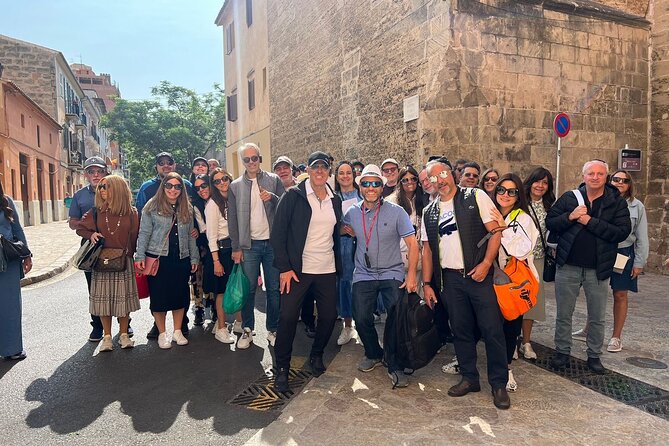
You meet at Starbucks on Plaça de Cort, 1, in central Palma. From there, the experience begins at the Jewish Quarter Interpretation Center, next to the entry point to the old Jewish quarter.
The word Call is useful here. In Palma and other Catalan-speaking parts of Spain, such as Barcelona and Valencia, you may see Carrer de Call or Street of the Jewish Quarter. The name helps you recognize that you are entering an area once associated with Jewish life, even when later buildings and changing streets make the old boundaries hard to see.
I like this approach because it starts with the city under your feet. You are not simply looking at an isolated exhibit. You are connecting streets, homes, workshops, religious life, and later discrimination. The stones do not explain themselves, so the guide matters greatly.
This is also where the tour turns toward the difficult parts of Majorcan history. You learn about the Inquisition, forced conversions, and the emergence of Crypto-Jews. These were people who publicly professed Catholicism while privately adhering to Judaism. The subject requires care, since it involves pressure, fear, identity, and the long effects of public prejudice.
The route also deals with how a community can remain present after its official identity has been suppressed. That is one of the strongest reasons to choose this experience over a general old-town walk. You are not only hearing about medieval Jewish residents. You are following the later lives of families who carried that past into modern Palma.
Trips off the same stretch of Mallorca coast:
- Palma: Cathedral of Mallorca Skip-the-Line Entry Ticket
★ 4.6 · 14,386 reviews - Palma de Mallorca: 5-Hour Catamaran Cruise with Lunch & Swim
★ 4.5 · 9,957 reviews - Porto Cristo: Caves of Hams Entry Ticket
★ 4.2 · 6,548 reviews
The Xueta streets and a living family story
A central part of the walk takes you along streets where Xueta families lived for centuries, reportedly until as recently as the 1960s. The Xueta identity is tied to Majorca’s Jewish descendants and to a community that faced marginalization long after forced conversions had taken place.
This detail gives the tour a modern edge. It is easy to imagine persecution as something sealed away in the Middle Ages. The Xueta story shows how social labels and prejudice can last for generations. A street that looks ordinary can hold a much longer memory than its paving stones suggest.
You also hear how signs of this community remain in present-day Palma. Some jewelry shops have stayed within the same families for generations. The tour does not present Jewish heritage as something that vanished completely. Instead, it traces how family names, occupations, and streets can preserve connections even after public religious life has been broken.
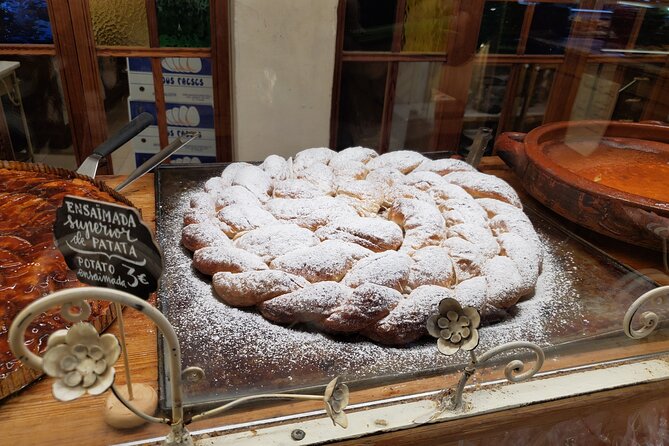
One distinctive food detail concerns the ensaimada, Majorca’s famous pastry. The explanation given on this experience connects its use of pork fat with a reaction to centuries of prejudice and discrimination. That is a striking example of how food can become a public signal of Catholic identity. I would treat this as a point to discuss with your guide rather than as the sole reason to order a pastry, but it adds a memorable link between daily life and religious pressure.
The walking route lasts about three hours, so comfortable shoes are sensible. The supplied details do not promise a fixed number of streets or a particular amount of time at each site. If you have mobility concerns, ask before booking, since the experience takes place in Palma’s old quarter and includes walking between stops.
A tunnel inside a ceramics workshop
One of the route’s more unusual moments is entry into a secret tunnel in a ceramics workshop. This is the sort of stop that can make a history walk feel concrete. Instead of only hearing that the old quarter had layers beneath and behind its visible streets, you get a chance to see an unusual physical space connected with the area.
The description does not explain the tunnel’s exact purpose or age, so I would avoid booking with a fixed expectation about what it represents. Its value is in the setting and the sense that Palma’s old quarter contains spaces you would not find on a standard city walk.
The ceramics workshop also helps keep the tour from becoming a string of lectures. You move through working places and old urban spaces as well as formal interpretation sites. That mix suits you if you learn best by linking a story to a doorway, a street, or a room.
The route also includes memorial plaques or Stolpersteins connected with the Spanish Civil War. The supplied details describe these as part of the walk, but do not give the names or exact locations of the people commemorated. Expect the guide to use them as another way to discuss memory, political violence, and the marks left on Palma’s streets.
This material may feel heavy. That is appropriate to the subject, but it also means the tour is not designed as a light shopping stroll through central Palma. You should choose it because you want to think about difficult history, not simply because you have a free morning near Plaça de Cort.
Thirty minutes at the Maimó Ben Faraig Museum
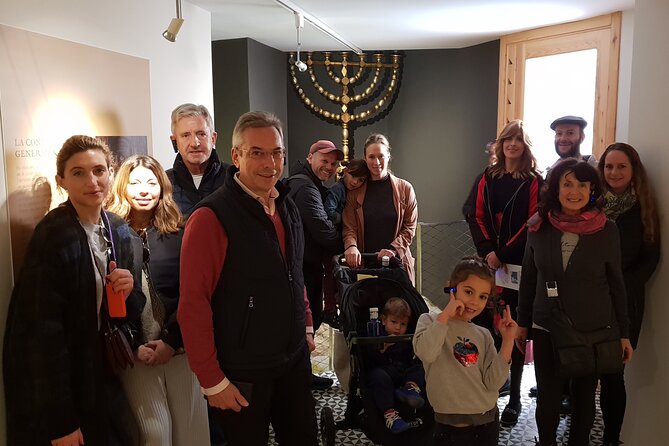
The Centre Maimó Ben Faraig Museum is scheduled for about 30 minutes. After walking through the old quarter, a museum stop gives you a place to gather the information and look at Jewish heritage in a more concentrated way.
The available details do not specify the museum’s full collection or name individual displays. That makes it hard to judge how much time you might want there beyond the planned half hour. Still, the stop has practical value. A guided walk can give you atmosphere and location, while a museum can provide a clearer framework for names, objects, and historical sequence.
I would pay close attention to how the guide connects the museum to the streets you have already seen. The best use of this stop is not as an unrelated indoor visit. It should help you understand the former quarter, the effects of the Inquisition, and the continuing story of the Xueta community.
Because admission is included, you do not need to budget for a separate museum ticket. The price also includes all fees and taxes. Food and drinks are not included, so plan to buy coffee, a snack, or lunch separately if your timing calls for it.
Same island, a completely different afternoon:
- Palma de Mallorca: City Sightseeing Hop-On Hop-Off Bus Tour
★ 4.1 · 4,450 reviews - Mallorca: Island Tour with Boat, Tram & Train from the South
★ 4.4 · 3,888 reviews - Palma: Catamaran Cruise with Swimming and Snorkelling
★ 4.3 · 2,859 reviews - Mallorca: Caves of Drach Day Trip & Optional Caves of Hams
★ 4.3 · 2,720 reviews
The 1652 oven at Panaderia Fiol
The final listed stop is Panaderia Fiol, a modern bakery with a medieval oven dating to 1652. This is an appealing finish because it shifts the focus from persecution and community identity to the survival of old buildings, food traditions, and working spaces.
The bakery is not presented as a meal stop. Breakfast, lunch, snacks, coffee, and tea are specifically excluded. You may find something interesting to look at or purchase, but you should not assume that food is included in the tour price.
The oven itself is the draw. A bakery still operating with an oven that dates to 1652 gives you a direct link between Palma’s built past and its everyday life. It also fits the earlier discussion of the ensaimada and the way food can carry cultural and religious meaning.
There is one practical point to keep in mind. The current route does not promise a Judaica shop. A former Jewish store connected with the operators is no longer available, so do not book this experience expecting to finish with Jewish religious goods or a dedicated shopping stop. If that is important to you, ask the provider about the present route before paying.
What the private format adds
This is a private activity, so only your own group participates. That can be a real advantage when the subject includes forced conversion, family identity, and discrimination. You can ask direct questions without waiting for a large group to catch up, and the guide can spend more time on the parts that interest you.
The format also helps if your group has mixed levels of background knowledge. Someone who knows little about Jewish history in Spain can ask for basic context, while someone with more interest in the Inquisition or Xueta families can request more detail.
The supplied information does not identify the guide by name. One past booking described the guide as very nice but also raised concerns about the guide’s level of subject knowledge and the organization of the walk. That means I would confirm who will lead your tour and what the current route includes, especially if the specialist quality of the history is your main reason for booking.
The current score is 4.6 from 11 ratings, with 91 percent recommending the experience. That is encouraging, but the small number of ratings calls for realistic expectations. The strongest praise centers on the personal nature of the tour and how much one participant learned. The sharpest criticism concerns outdated route details, organization, and guide expertise.
Is $259.29 a fair price?
At $259.29 per person, this is expensive for four hours if you compare it with a standard city walking tour. You are not paying for a long list of ticketed attractions. The Jewish Quarter Interpretation Center, Maimó Ben Faraig Museum, and Panaderia Fiol are listed without separate admission charges, while the main cost is tied to the private guide and the focused subject.
The value improves for a family or group of friends that can share the booking. Group discounts are available, though the exact reduction is not provided. A private experience can also save you from joining a large group that moves too quickly through a subject that deserves questions.
For one person or a couple, the price requires more thought. I would book it if Jewish Majorcan history is a central interest and you want a dedicated guide rather than a broad Palma overview. I would skip it if you mainly want the cathedral, royal palace, food market, or postcard views, since those are not the focus here.
You should also remember the opportunity cost. Four hours is a large part of a short stay in Palma. The tour is most useful early in your visit if you want its historical context to shape later walks through the old town. It may be less useful late in a busy trip when you are already tired of walking and museum stops.
Who will get the most from this tour?
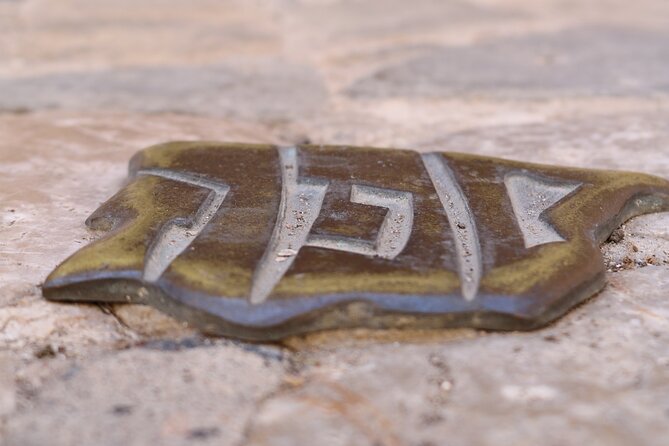
I would recommend it to you if you like local history that reaches beyond famous buildings. It suits people interested in Jewish Spain, the Inquisition, religious conversion, family identity, food traditions, and the ways communities survive public pressure.
It is also a good match for a small family group with older children or teenagers who can engage with serious history. The tunnel, bakery oven, family jewelry shops, and street-based storytelling may hold their attention better than a long lecture.
You may want another Palma tour if you have limited mobility, dislike walking on old-city streets, or want a relaxed food experience. The duration is about four hours, and the route includes several walking sections. The available information does not state whether the route is wheelchair accessible, so ask before booking if that matters to you.
Weather matters, too. The experience requires good weather. If poor weather causes cancellation, you are offered a different date or a full refund. You can cancel for a full refund up to 24 hours before the start time, but cancellations or changes made less than 24 hours ahead are not refunded or accepted.
Should you book Secrets of Jewish Majorca?
Book it if you want Palma’s Jewish past explained through real streets, family stories, food, memorials, and unusual working spaces. The Xueta material, the ceramics workshop tunnel, and the 1652 bakery oven give the half-day experience more texture than a standard historical introduction.
I would confirm the current route and guide before booking. Do not count on a former Jewish shop or Judaica store, and ask who will lead the walk if specialist historical detail matters to you. For a group that values privacy and serious discussion, the cost can be justified. For a solo visitor seeking a general introduction to Palma, it is likely too expensive and too narrowly focused.
FAQ
Where does the tour start?
The tour starts at Starbucks, Plaça de Cort, 1, Distrito Centro, 07001 Palma, Illes Balears, Spain.
Where does the tour end?
The activity ends back at the meeting point.
How long does the experience last?
The experience lasts approximately four hours. About three hours are allocated to the Palma Jewish quarter portion, and about 30 minutes each to the Centre Maimó Ben Faraig Museum and Panaderia Fiol.
Is this a private tour?
Yes. Only your group participates in the activity.
Are food and drinks included?
No. Coffee, tea, breakfast, lunch, and snacks are not included. All fees and taxes are included.
What happens if the weather is poor?
The experience requires good weather. If it is canceled because of poor weather, you are offered a different date or a full refund. You can also cancel up to 24 hours before the start time for a full refund.
Newest Mallorca write-ups
- VISIT BODEGAS BORDOY ,DEGUSTACION 5 WINES, FINGER FOOD★ 5.0 · 3 reviews
- Palma: Private Guided Segway Tour★ 4.9 · 15 reviews
- V8 Trike Tour mit Fahrer/Guide für max 4Gäste★ 5.0 · 40 reviews
- Tramuntana Panorama Tour – Soller, Deiá, Valldemossa★ 4.9 · 34 reviews
- Travel and play tennis in Mallorca★ 5.0 · 5 reviews
- Tour Beach Portal Vells, Cave Portal Vells.★ 5.0 · 7 reviews
- Mallorca Shore Excursion Bellver Castle and Cathedral Private Tour★ 5.0 · 4 reviews
- Palma de Mallorca Shore Excursion: Palma, Deia and Sa Foradada★ 4.5 · 10 reviews